Report an issue
Tell us what's wrong and we'll take a look.
Thanks – we got it. We'll review and follow up if needed.
The organization of Thomas Aquinas' Summa Theologiae is a remarkable feat of clarity in comparison with its predecessors. Although Aquinas incorporates materials from very different theological traditions he reduces all of these topics to a concise and clear plan. Mark D. Jordan's translation, On Faith, captures this clarity, Aquinas' most characteristic achievement. v. 1. On faith, Summa theologiae, part 2-2, questions 1-16 of St. Thomas Aquinas.
Thomas Aquinas
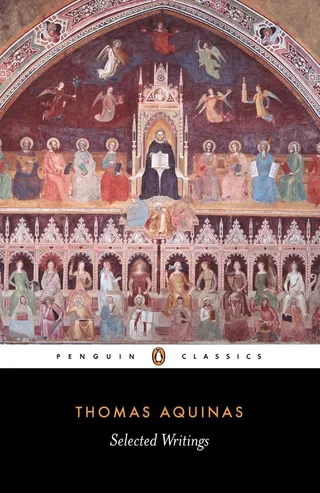
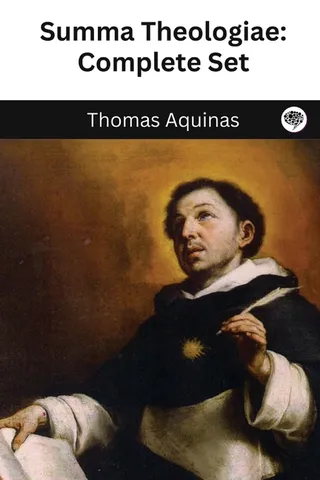
Thomas Aquinas (1225-1274) was an Italian Dominican friar, philosopher, theologian, and one of the most influential thinkers in Christian intellectual history. A major figure of medieval Scholasticism, he sought to explain Christian theology through careful philosophical reasoning, drawing especially on the works of Aristotle.His writings explored subjects including God, faith and reason, ethics, natural law, human nature, and the sacraments. His most famous works include Summa Theologiae and Summa Contra Gentiles. Aquinas's thought became foundational to Catholic theology and continues to influence philosophy, theology, and Christian ethics.He was canonized as a saint in 1323 and was later recognized as a Doctor of the Church.
More by Thomas Aquinas






Mark D Jordan
Translated by
Mark Jordan is R. R. Niebuhr Research Professor at Harvard Divinity School. His recent books include Recruiting Young Love: How Christians Talk about Homosexuality and Convulsing Bod-ies: Religion and Resistance in Foucault. He is also author of the groundbreaking work The Invention of Sodomy in Christian Theology.


Why Readwise Books?
Readwise Books is an ebook & audiobook platform that automatically logs how much you and your friends read, making it fun and easy to read more. Learn more →