
Andromache
Report an issue
Tell us what's wrong and we'll take a look.
Thanks – we got it. We'll review and follow up if needed.
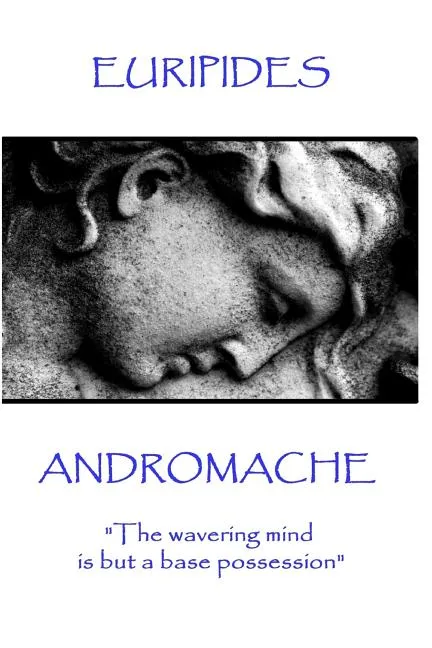

Euripides (480 BC-406 BC) is revered as one of the three great tragedians of classical Athens, along with Aeschylus and Sophocles, and produced the largest body of extant work by any ancient playwright. He is considered to be the most modern of the three, and his works laid the foundation for Western theatre. Euripides turned to playwriting at a young age, achieving his first victory in the dramatic competitions of the Athenian City Dionysia in 441 b.c.e. He would be awarded this honor three more times in his life, and once more posthumously. Written about ten years after the Trojan War, "Andromache" may be a bitter attack on the Trojan national character. Andromache has been given as a slave and concubine to Neoptolemus, son of Achilles, and incurs the wrath of his barren wife, Hermoine, when she becomes pregnant. The plot illustrates a sophistry, cowardice and violence in the Spartans.
Euripides
Euripides was a tragedian of classical Athens. He was born on Salamis Island around 480 BC to his mother, Cleito, and father, Mnesarchus, a retailer who lived in a village near Athens. He had two disastrous marriages, and both his wives—Melite and Choerine (the latter bearing him three sons)—were unfaithful. He became a recluse, making a home for himself in a cave on Salamis. Along with Aeschylus and Sophocles, he is one of the three ancient Greek tragedians for whom any plays have survived in full. He became, in the Hellenistic Age, a cornerstone of ancient literary education. The details of his death are uncertain.
More by Euripides


Why Readwise Books?
Readwise Books is an ebook & audiobook platform that automatically logs how much you and your friends read, making it fun and easy to read more. Learn more →