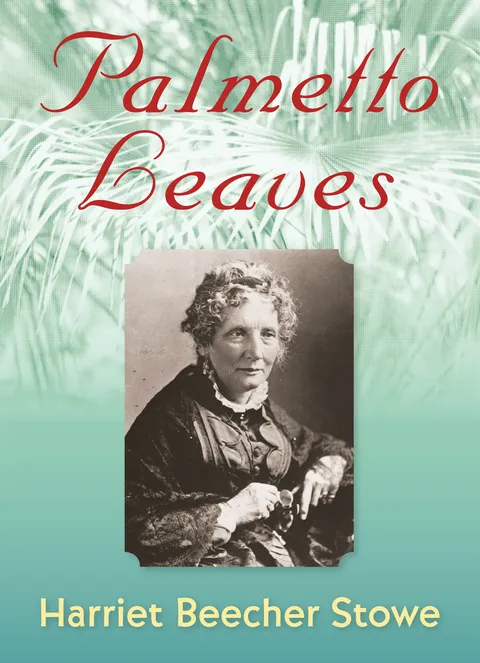
Palmetto Leaves
Report an issue
Tell us what's wrong and we'll take a look.
Thanks – we got it. We'll review and follow up if needed.

In 1867, the author of Uncle Tom’s Cabin settled in a small cottage in Mandarin, Florida, overlooking the St. Johns River. She had promised her Boston publisher another novel but was so taken with northeast Florida that she produced instead a series of sketches of the land and the people which she submitted in 1872 under the title Palmetto Leaves.
Stowe describes life in Florida in the latter half of the 19th century—"a tumble-down, wild, panicky kind of life—this general happy-go-luckiness which Florida inculcates." Her idyllic sketches of picnicking, sailing, and river touring expeditions and simple stories of events and people in this tropical "winter summer" land became the first unsolicited promotional writing to interest northern tourists in Florida.
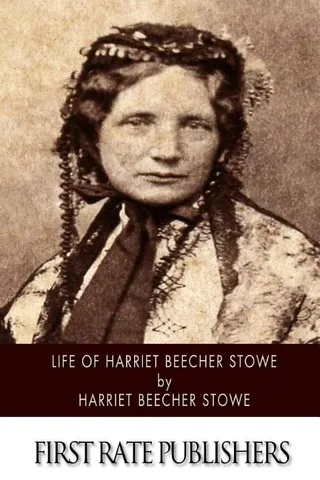
Harriet Beecher Stowe
Harriet Beecher Stowe was an American author and abolitionist. Born in Litchfield, Connecticut, she was raised in a deeply religious family and educated in a seminary school run by her elder sister. In her adult life, Stowe married biblical scholar and abolitionist Calvin Ellis Stowe, who would later go on to work as Harriet’s literary agent, and the two participated in the Underground Railroad by providing temporary refuge for escaped slaves travelling to the American North. Shortly before the outbreak of the American Civil War, Stowe published her most famous work, Uncle Tom’s Cabin, a stark and sympathetic depiction of the desperate lives of African American slaves. The book went on to see unprecedented sales, and informed American and European attitudes towards abolition. In the years leading up to her death, suffering from dementia or Alzheimer’s disease, Stowe is said to have begun re-writing Uncle Tom’s Cabin, almost word-for-word, believing that she was writing the original manuscript once again. Stowe died in July 1, 1896 at the age of eighty-five.
More by Harriet Beecher Stowe


Why Readwise Books?
Readwise Books is an ebook & audiobook platform that automatically logs how much you and your friends read, making it fun and easy to read more. Learn more →