
Chamber Music
Report an issue
Tell us what's wrong and we'll take a look.
Thanks – we got it. We'll review and follow up if needed.


James Joyce's book of poems titled Chamber Music was released by Elkin Mathews in May 1907. There were originally thirty-four love poems in the anthology, but two more were added before it was published ("All day I hear the noise of waters" and "I hear an army charging upon the land"). Although it is widely believed that the title refers to the sound of urine tinkling in a chamber pot, this is a later Joycean embellishment that gives an earthiness to a title that was initially proposed by his brother Stanislaus and that Joyce (by the time of publication) had come to dislike: "The reason I dislike Chamber Music as a title is that it is too complacent," he admitted to Arthur Symons in 1906. "I would prefer a title that criticized the work while avoiding outright trashing it." Chamber Music's poetry isn't at all racy or evocative of the sound of tinkling urine, in fact. The poems were well-received by critics despite poor sales (less than half of the original print run of 500 had been sold in the first year).
James Joyce
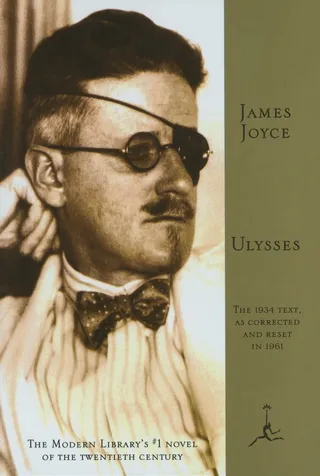
James Joyce (1882–1941) is best known for his experimental use of language and his exploration of new literary methods. His subtle yet frank portrayal of human nature, coupled with his mastery of language, made him one of the most influential novelists of the 20th century. Joyce’s use of “stream-of-consciousness” reveals the flow of impressions, half thoughts, associations, hesitations, impulses, as well as the rational thoughts of his characters. The main strength of his masterpiece novel, Ulysses (1922) lies in the depth of character portrayed using this technique. Joyce’s other major works include Dubliners, a collection of short stories that portray his native city, a semi-autobiographical novel called A Portrait of the Artist As a Young Man (1916), and Finnegan’s Wake (1939).
More by James Joyce




Why Readwise Books?
Readwise Books is an ebook & audiobook platform that automatically logs how much you and your friends read, making it fun and easy to read more. Learn more →