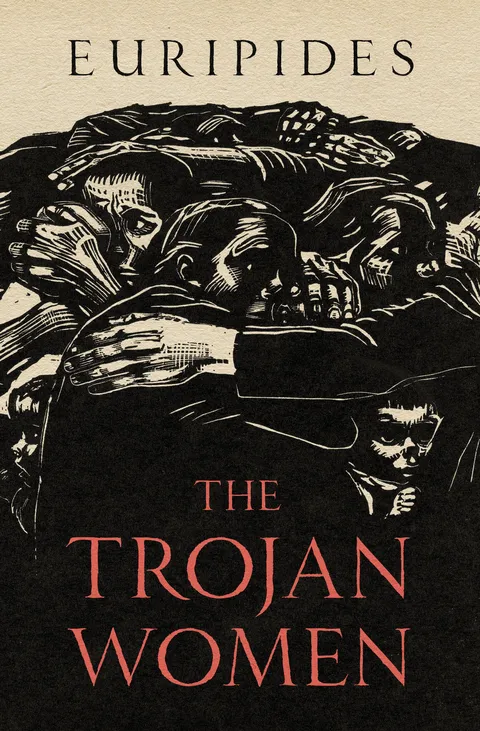
The Trojan Women
Report an issue
Tell us what's wrong and we'll take a look.
Thanks – we got it. We'll review and follow up if needed.

A powerful look at the lives of a people destroyed by military conflict, from the writer Aristotle called "the most tragic of poets." Produced in 415 BC, The Trojan Women is a remarkable look at human suffering in the aftermath of war. Unlike The Iliad and The Odyssey, which focus on the Greek victors of the Trojan War, Euripides shines his moral imagination on the Trojan survivors: the women held captive by the Greek army. Showcasing the tragedian's empathy for the plight of the female victims, The Trojan Women gives the modern reader a view into the grief of Hecuba, a grandmother who lost generations of her family, and the grace of Andromache, who endures the hardship of living as a slave and a concubine at the hands of the enemy. Profound and provocative in his examination of the brutality of his own countrymen, Euripides's The Trojan Women offers a searing viewpoint on the horrors of war by giving voice to a people grappling with the destruction of an entire way of life.
Euripides
Charles Martin is a poet, translator, and essayist. The author of seven books of poems and translator of Catullus and Ovid, he is the recipient of an Academy Award in Literature from the American Academy and Institute of Arts and Letters, a Bess Hokin Prize from Poetry magazine, and fellowships from the Ingram Merrill Foundation and the National Endowment for the Arts.
A.E. Stallings is an American poet and translator who lives in Athens, Greece. Her most recent books are LIKE: Poems and a translation of Hesiod’s Works and Days.
More by Euripides




Why Readwise Books?
Readwise Books is an ebook & audiobook platform that automatically logs how much you and your friends read, making it fun and easy to read more. Learn more →