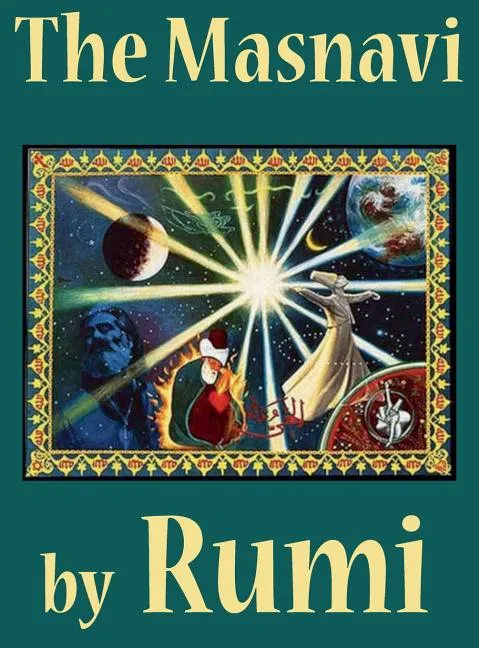
The Masnavi
Report an issue
Tell us what's wrong and we'll take a look.
Thanks – we got it. We'll review and follow up if needed.
Stories are told to illustrate a point and each moral is discussed in detail. It incorporates a variety of Islamic wisdom but primarily focuses on emphasizing inward personal Sufi interpretation. In contrast to Rumi's Diwan, the Masnavi is a relatively "sober" text. It explains the various dimensions of spiritual life and practice to Sufi disciples and anyone who wishes to ponder the meaning of life. It was left unfinished at the time of the demise of Mawlana Rumi but he said in the last few line of the book that another pious person will come to complete the book and the Sunni Muslims believe that man to be Mufti Ilaahi Bakhsh Kandhlawi, who authored Ikhtimaam-e-Mathnawi as an addendum and the completion of this magnum opus.
Books 1 and 2: They "are principally concerned with the nafs, the lower carnal self, and its self-deception and evil tendencies."
Books 3 and 4: These books share the principal themes of Reason and Knowledge. These two themes are personified by Rumi in the Biblical and Quranic figure of the Prophet Moses.
Books 5 and 6: These last two books are joined by the universal ideal that man must deny his physical earthly existence to understand God's existence.
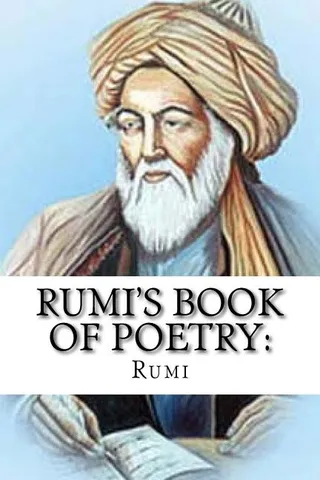
Rumi
"Rumi (30 September 1207 - 17 December 1273), was a 13th-century Persian poet, Hanafi faqih, Islamic scholar, Maturidi theologian and Sufi mystic originally from Greater Khorasan in Greater Iran. Rumi's influence transcends national borders and ethnic divisions: Iranians, Tajiks, Turks, Greeks, Pashtuns, other Central Asian Muslims, as well as Muslims of the Indian subcontinent have greatly appreciated his spiritual legacy for the past seven centuries. His poems have been widely translated into many of the world's languages and transposed into various formats. Rumi has been described as the ""most popular poet"" and the ""best selling poet"" in the United States.Rumi's works are written mostly in Persian, but occasionally he also used Turkish, Arabic and Greek in his verse. His Masnavi (Mathnawi), composed in Konya, is considered one of the greatest poems of the Persian language. His works are widely read today in their original language across Greater Iran and the Persian-speaking world. Translations of his works are very popular, most notably in Turkey, Azerbaijan, the United States and South Asia. His poetry has influenced not only Persian literature, but also the literary traditions of the Ottoman Turkish, Chagatai, Urdu, Bengali and Pashto languages."
More by Rumi


Why Readwise Books?
Readwise Books is an ebook & audiobook platform that automatically logs how much you and your friends read, making it fun and easy to read more. Learn more →