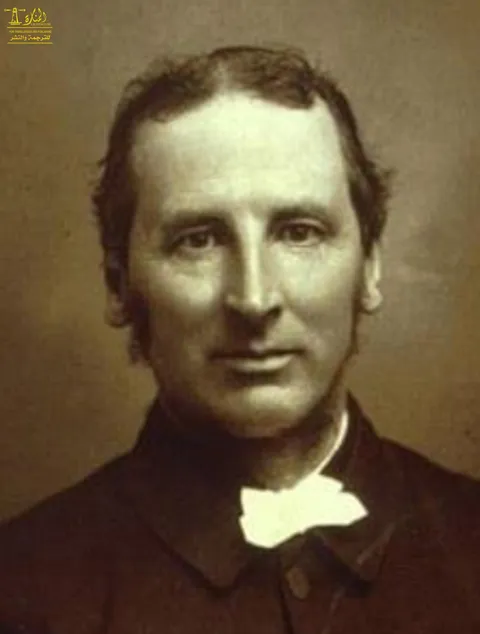
Complete Works of Edwin Abbott Abbott
Report an issue
Tell us what's wrong and we'll take a look.
Thanks – we got it. We'll review and follow up if needed.
Edwin Abbott Abbott, a British headmaster, died Oct. 12, 1926, at age 87. Abbott is best known for a book that he published in 1884, titled Flatland. The book is at once a romance, a satire, and an allegory, as it tells the tale of a square (literally, “A Square”) who inhabits a two-dimensional world, and is one day introduced to the third dimension and to creatures such as cubes. Naturally, as he attempts to enlighten his fellow-Flatlanders about this new dimension in their lives, he is branded a heretic and thrown into prison, where, à la Boethius, he consoles himself by writing this book.
Most of the appeal of Flatland derives not from its warnings about the dangers of being close-minded, but from the delightful descriptions and drawings of daily life in Flatland. Abbott provides a diagram of A Square’s house (as seen from the third dimension, by the way; see first image). Note that his servants are mere triangles, his sons (in their bedrooms at upper left) are pentagons, and his grandsons (at bottom) are hexagons. So the number of sides you have is an indicator of social status, and each new generation gains a side, suggesting some kind of upward mobility, so that everyone can have some future hope of “improving his angle”. But not the women, who are nearly one-dimensional, like needles, and who are so dangerous to men (because you cannot see them coming until they have run right through you) that they have their own separate house entrance at the right. The conjugal bed is next to Mrs Square’s entrance and apartment, so that would seem to be her primary function, but how she conceives and gives birth to polygonal offspring is a mystery upon which the book sheds no light. Speaking of light, no one in Flatland knows where the light comes from that illuminates the insides of their houses. A Square knows–it comes from “above”–but since no one can imagine what direction that is, they agree that Mr Square should continue to be mocked and locked up.
This collection includes:
I. Introduction
II. Flatland: A Romance of Many Dimensions
III. FLATLAND
IV. How to Write Clearly: Rules and Exercises on English Composition
V. Philochristus: Memoirs of a Disciple of the Lord
VI. Onesimus: Memoirs of a Disciple of St. Paul
VII. Silanus the Christian
Barbara Hall
Barbara Hall is an award-winning novelist, screenwriter, and television producer. She is the creator and producer of the Emmy-nominated television series Joan of Arcadia. Her TV writing and producing credits include Northern Exposure, Chicago Hope, and Judging Amy.
She is the author of four young adult novels, including Skeeball and the Secret of the Universe (1987, Orchard Press), Dixie Storms (1990, HBJ), Fool's Hill (1992, Bantam), and the mystery House Across the Cove (1995, Bantam). Her previous novels include A Better Place (1992), Close to Home (1997), and A Summons yo New Orleans, all published by Simon & Schuster.
Barbara Hall lives in Pacific Palisades, California, with her daughter Faith.
More by Barbara Hall



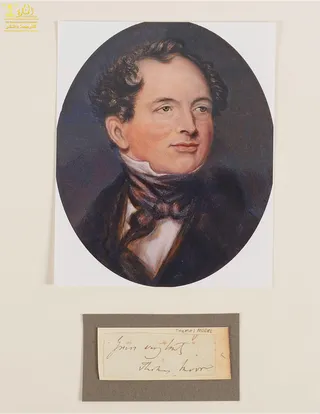

Edwin Abbott Abbott
Edwin Abbott Abbott (1838-1926) was an author, schoolmaster, Anglican priest, and theologian. Born in London, he excelled at both the City of London School and St. John's College, taking the highest honors in classics, mathematics, and theology. After retiring as the headmaster of the City of London School (a position he earned at the age of 26) in 1889, he dedicated his life to literary and theological pursuits. Beyond expounding on his open-minded approach to theology, he also wrote a Shakespearean Grammar that is still considered to be a central piece of English philology. He is best remembered for his 1884 novella Flatland: A Romance of Many Dimensions, an evergreen piece of proto-Science Fiction that still inspires authors and readers to this day.
More by Edwin Abbott Abbott
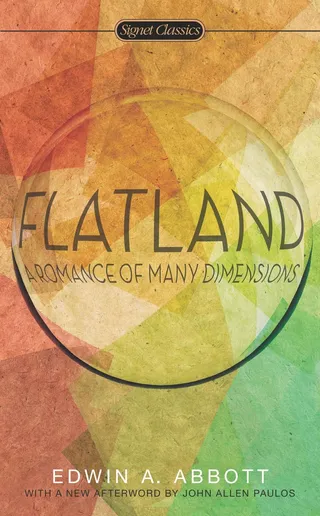
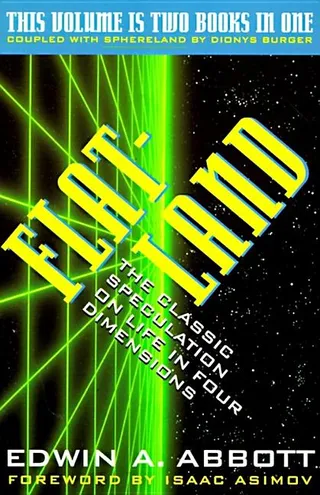
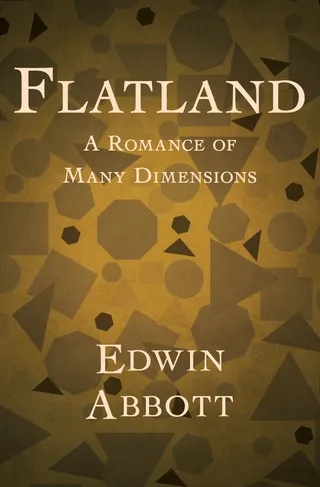



Why Readwise Books?
Readwise Books is an ebook & audiobook platform that automatically logs how much you and your friends read, making it fun and easy to read more. Learn more →