Shoot!
Report an issue
Tell us what's wrong and we'll take a look.
Thanks – we got it. We'll review and follow up if needed.
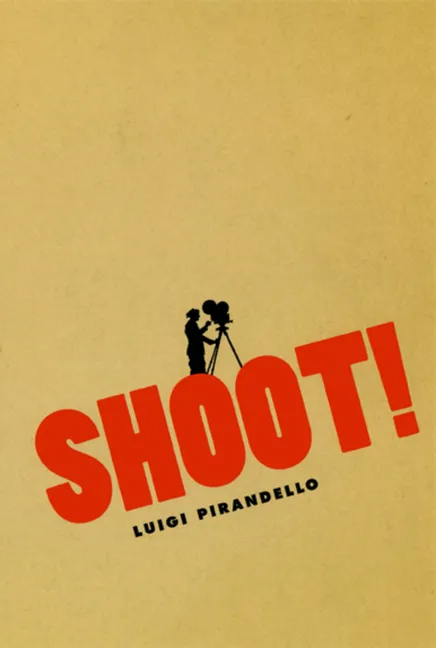
"Shoot!" is a profound psychological novel by Nobel Prize winner Luigi Pirandello that delves into the burgeoning world of early 20th-century cinema. Narrated through the journals of Serafino Gubbio, a camera operator for a film studio, the work offers a biting critique of the mechanical age and its dehumanizing effects on art and the individual. Gubbio views the world through the lens of his machine, becoming a passive observer of the high drama and tragic entanglements that surround the film's cast and crew.
As the camera captures reality, the boundary between the artificiality of the set and the raw emotions of the actors begins to blur, culminating in a shocking climax. Pirandello masterfully explores themes of alienation, the loss of identity, and the existential vacuum created by modern technology. "Shoot!" remains a seminal work that captures the shift from the traditional to the industrial, questioning the cost of progress on the human spirit. This compelling narrative serves as both a historical snapshot of the silent film era and a timeless philosophical inquiry into the nature of observation and detachment.
This work has been selected by scholars as being culturally important, and is part of the knowledge base of civilization as we know it. This work was reproduced from the original artifact, and remains as true to the original work as possible. Therefore, you may see the original copyright references, library stamps (as most of these works have been housed in our most important libraries around the world), and other notations in the work.
This work is in the public domain in the United States of America, and possibly other nations. Within the United States, you may freely copy and distribute this work, as no entity (individual or corporate) has a copyright on the body of the work.
As a reproduction of a historical artifact, this work may contain missing or blurred pages, poor pictures, errant marks, etc. Scholars believe, and we concur, that this work is important enough to be preserved, reproduced, and made generally available to the public. We appreciate your support of the preservation process, and thank you for being an important part of keeping this knowledge alive and relevant.
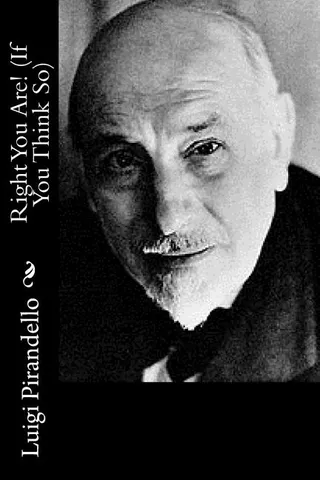
Luigi Pirandello
Luigi Pirandello was an influential Italian dramatist, novelist, poet, and short story writer, best known for his pioneering work in the theater. Born on June 28, 1867, in Agrigento, Italy, Pirandello's writing was deeply influential in the realm of modern drama. His works often explored complex themes such as the nature of identity, the relationship between reality and illusion, and the blurred boundaries between art and life. Pirandello's distinctive approach to theater and narrative earned him the 1934 Nobel Prize in Literature, awarded "for his bold and ingenious revival of dramatic and scenic art." He was married to Antonietta Portulano, with whom he had three children: Stefano, Fausto, and Lietta. Pirandello's legacy extends beyond literature, with his works inspiring numerous film adaptations, including Kaos and The Former Mattia Pascal. He passed away on December 10, 1936, in Rome, at the age of 69. Pirandello's profound influence on theater continues to resonate today, with his exploration of existential questions and theatrical experimentation leaving a lasting mark on the field.
More by Luigi Pirandello






Why Readwise Books?
Readwise Books is an ebook & audiobook platform that automatically logs how much you and your friends read, making it fun and easy to read more. Learn more →