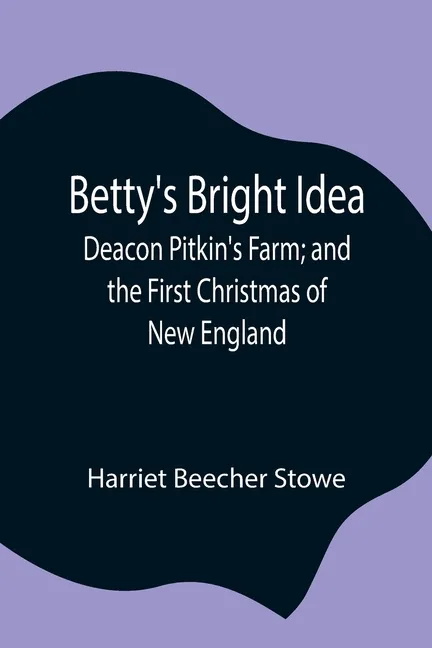
Betty'S Bright Idea; Deacon Pitkin'S Farm; And The First Christmas Of New England
Report an issue
Tell us what's wrong and we'll take a look.
Thanks – we got it. We'll review and follow up if needed.
Betty's Bright Idea; Deacon Pitkin's Farm; And The First Christmas Of New England gathers three affectionate windows into a rural village in nineteenth century New England, where everyday kindness, bright ideas, and steadfast faith knit a community together. A warm, accessible entry point for children and a thoughtful read for adults, these tales shine as a historical fiction collection that celebrates village life, Christmas observances, and the enduring power of family values. This restored edition captures the charm of classic american literature anthology while preserving the moral clarity and gentle humour that have delighted readers for generations. The stories offer more than entertainment; they function as a moral tales anthology and a sturdy, family-friendly resource for classroom use and family reading aloud. They invite readers to explore rural community life, the rhythms of a rural new england village, and the responsibilities that come with neighbourly care, all through approachable language and memorable characters. A note on literary and historical significance: these narratives by nineteenth century america authors stand as cultural touchstones, bridging readerly nostalgia with timeless lessons. Out of print for decades and now republished by Alpha Editions, this volume is more than a reprint-it is a collector's item and a cultural treasure, restored for today's and future generations. For casual readers and serious collectors alike, Betty's Bright Idea offers enduring warmth, thoughtful reflection, and a doorway into a cherished era.
Harriet Beecher Stowe
Harriet Beecher Stowe was an American author and abolitionist. Born in Litchfield, Connecticut, she was raised in a deeply religious family and educated in a seminary school run by her elder sister. In her adult life, Stowe married biblical scholar and abolitionist Calvin Ellis Stowe, who would later go on to work as Harriet’s literary agent, and the two participated in the Underground Railroad by providing temporary refuge for escaped slaves travelling to the American North. Shortly before the outbreak of the American Civil War, Stowe published her most famous work, Uncle Tom’s Cabin, a stark and sympathetic depiction of the desperate lives of African American slaves. The book went on to see unprecedented sales, and informed American and European attitudes towards abolition. In the years leading up to her death, suffering from dementia or Alzheimer’s disease, Stowe is said to have begun re-writing Uncle Tom’s Cabin, almost word-for-word, believing that she was writing the original manuscript once again. Stowe died in July 1, 1896 at the age of eighty-five.
More by Harriet Beecher Stowe


Why Readwise Books?
Readwise Books is an ebook & audiobook platform that automatically logs how much you and your friends read, making it fun and easy to read more. Learn more →