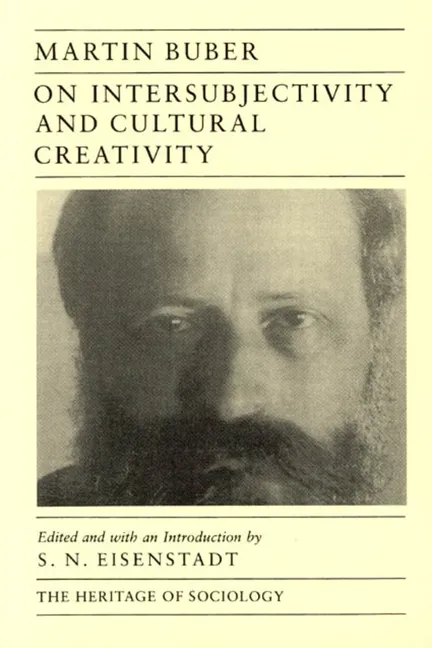
On Intersubjectivity and Cultural Creativity
Report an issue
Tell us what's wrong and we'll take a look.
Thanks – we got it. We'll review and follow up if needed.
Buber's central focus in his sociological work is the relation between social interaction, or intersubjectivity, and the process of human creativity. Specifically, Buber seeks to define the nature and conditions of creativity, the conditions of authentic intersubjective social relations that nurture creativity in society and culture. He attempts to identify situations favorable to creativity that he believes exist to some extent in all cultures, though their fullest development occurs only rarely.
Buber considers the combination of open dialogue between human and human and a dialogue between man and God to be necessary for the crystallization of the common discourse that is essential for holding a free, just, and open society together.
Important for an understanding of Buber's thought, these writings-touching on education, religion, the state, and charismatic leadership-will be of profound value to students of sociology, philosophy, and religion.
Martin Buber
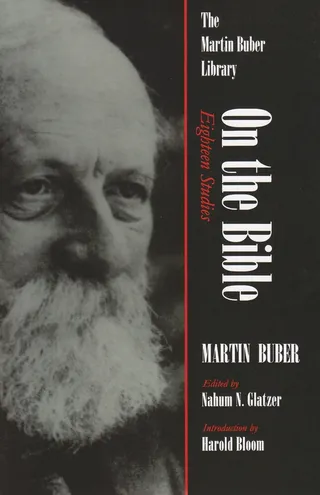
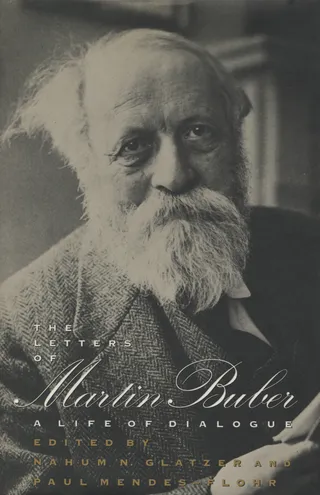
Martin Buber (1878–1965) was an Austrian-born Jewish philosopher, essayist, translator, and editor most known for his German translation of the Bible, his religious existentialism philosophy, and his role in the Zionist movement. Buber grew up in Vienna during the rule of the Austro-Hungarian Empire, which fell after World War I. He was raised by his grandparents, who introduced him to Zionism and Hasidism at a young age. Buber had a knack for languages, learning more than ten during his school years. After school, Buber was recruited to lecture on Jewish religious studies at universities, educational centers, and Jewish groups. In 1938, as the Nazi Party gained power, Buber left Germany and settled in Jerusalem. He continued to lecture in Jerusalem at Hebrew University. Known for politically utopian ideals including anarchism and socialism, Buber became a leader in the Zionist movement and supported a bi-national solution to the Israel-Palestine conflict. In 1951, he received the Goethe Prize of the University of Hamburg and in 1953, the Peace Prize of the German Book Trade. In 1958, he won the Israel Prize. In 1963, he won the Erasmus Award in Amsterdam. He lived and worked in Jerusalem until his death in 1965.
More by Martin Buber





Why Readwise Books?
Readwise Books is an ebook & audiobook platform that automatically logs how much you and your friends read, making it fun and easy to read more. Learn more →