Report an issue
Tell us what's wrong and we'll take a look.
Thanks – we got it. We'll review and follow up if needed.
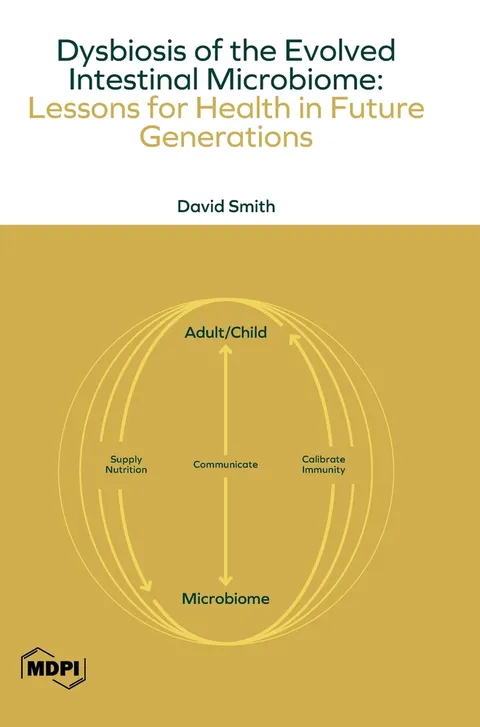
While it is clearly recognised that many non-communicable disorders are related to a disturbed microbiome (commonly called dysbiosis, a shortened term for microbiome failure: dysmicrobiosis), there is an absence of widely accepted underlying theories. The aim of this book is to show that all such disorders, be they weight gain, immune system disturbance, or poor mental health, stem from a single underlying problem: the failure to transfer key intestinal microbes from the mother to the new-born during birth. Furthermore, in contrast to the normal, exclusively bacterial approach, the book describes what might be called a "second generation" approach to the microbiome, that emphasises beneficial microeukaryotes acting to coordinate diverse bacterial functionality. Most importantly, lessons have been drawn to guide future research, the aim being to reintroduce these key microbes at the time of birth, alongside breast milk (bank milk if necessary) and before the immune system of the infant is fully established. If all goes as expected, not only can the present "triple plagues" of non-communicable disease be ameliorated more efficiently, but it should also be possible to banish such disease from future populations. Unfortunately, however, beneficial microeukaryotes will be hard to detect, while resistance-inducing oral antibiotics must be limited.
David Smith
David L. Smith holds a PhD from Southern Baptist Seminary. He has retired after half a century of service as a teacher, pastor, theology professor, and seminary academic administrator. He currently teaches part-time for the Lay Pastor Training Program of the Canadian Baptists of Ontario and Quebec (Canada).
More by David Smith












Why Readwise Books?
Readwise Books is an ebook & audiobook platform that automatically logs how much you and your friends read, making it fun and easy to read more. Learn more →