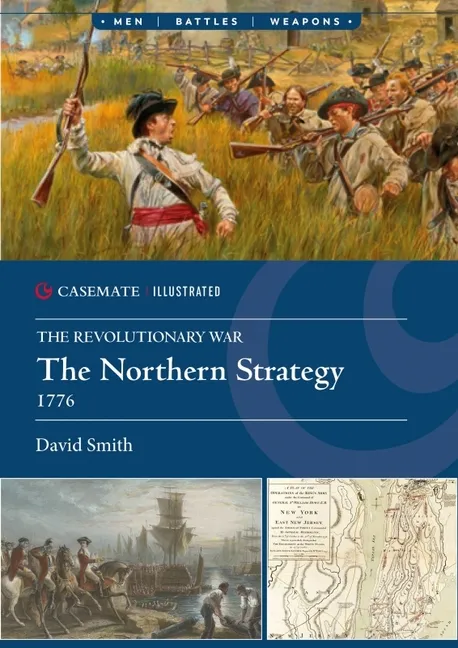
The Northern Strategy, 1776
Report an issue
Tell us what's wrong and we'll take a look.
Thanks – we got it. We'll review and follow up if needed.
The narrative chronicles Washington's resilience and strategic maneuvering as Continental forces contend with overwhelming odds, illness, and reconstituted enemy power during a pivotal late-year campaign.
On August 22, 1776, British troops began landing on Long Island. The much-delayed response to the outbreak of hostilities in Britain's North American Colonies had finally arrived.
On the face of it, the rebellious Americans faced a daunting prospect. The British army, under the command of William Howe, numbered more than 25,000 men, supported by a huge fleet of warships and transports commanded by his brother. The fledgling Continental Army, led by George Washington and stricken with disease, could muster less than half that number of men and had to rely on state troops and militia. To the north, meanwhile, Sir Guy Carleton led a second British army striking southwards from Canada, threatening to cut the colonies in two.
Over the ensuing months, Howe relentlessly chased Washington's dwindling army, inflicting major defeats in and around New York and threatening to end the rebellion before Christmas. As a harsh winter set in, the few remaining Continental soldiers found themselves underfed, under-dressed and under-equipped as thousands of British and German troops fanned out across the countryside to re-establish control.
How Washington survived, and kept enough of his army intact to inflict stinging defeats on the British to end the campaign, is one of the great feats of military history.
David L. Smith
David L. Smith holds a PhD from Southern Baptist Seminary. He has retired after half a century of service as a teacher, pastor, theology professor, and seminary academic administrator. He currently teaches part-time for the Lay Pastor Training Program of the Canadian Baptists of Ontario and Quebec (Canada).
More by David L. Smith











Why Readwise Books?
Readwise Books is an ebook & audiobook platform that automatically logs how much you and your friends read, making it fun and easy to read more. Learn more →