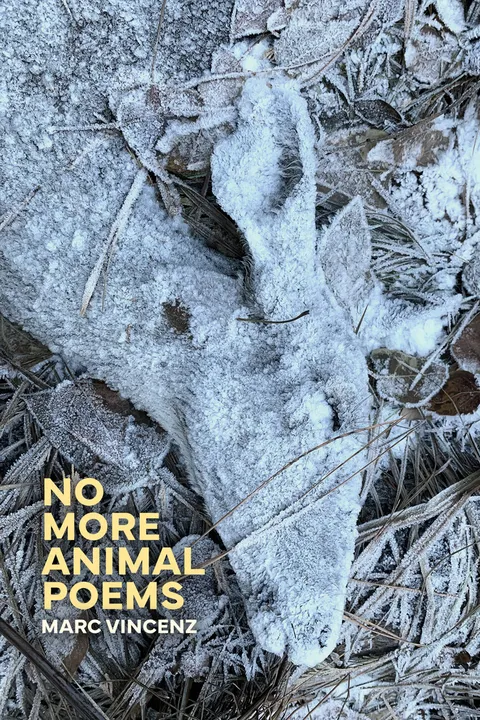
No More Animal Poems
Report an issue
Tell us what's wrong and we'll take a look.
Thanks – we got it. We'll review and follow up if needed.
They also refer to a growing hierarchy of foods which prioritise rarity often at enormous expense.There is a mordant and ironic humor informing many of the poems in this collection, and a keenly observant eye that complements Vincenz's interest in history and contemporary values. Indeed, some of the more overtly satirical poems skewer the human capacity for self-delusion and self-justification. Vincenz reminds the reader that numerous of our fineries and pretensions are causes of our increasing vulnerability.As the world changes, humanity's sense of a secure future dwindles. Their sense of their place in the world not only becomes more insecure but is riven by contradiction and crisis. And, in the midst of such change, poetic language itself becomes a plea. Vincenz's poems evoke what is lost or being lost with a pithy accuracy: faded watercolors of waterfalls and birds,
the salmon spawning, the she bears gulping salmon
as they ride the upsurge, upstaging the hovering buzzards;
and, at night, the crickets singing ancient love songs.
Marc Vincenz
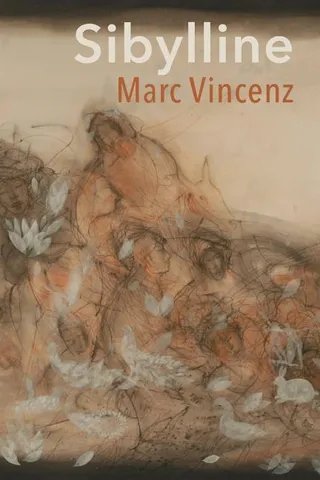
Marc Vincenz is co-editor of the journal Fulcrum, international editor of Plume, publisher and editor of MadHat Press and Plume Editions. He is the author of eleven books of poetry, including Becoming the Sound of Bees (Ampersand Books, 2015), Sibylline (Ampersand Books, 2016) and the forthcoming Leaning into the Infinite (Dos Madres Press, 2018). His novella set in ancient China, Three Taos of T'ao, or How to Catch a White Elephant, is to be released by Spuyten Duyvil in 2018. He has also been widely published elsewhere, including in The Nation, Ploughshares, The Common, Solstice, Raritan, Notre Dame Review, World Literature Today, Los Angeles Review of Books, New World Writing, et al. Vincenz, who was born in Hong Kong and holds dual British and Swiss nationalities, is a multi-lingual translator of many contemporary German, French and Romanian authors. His latest work of translation, Unexpected Development (White Pine Press, 2018), by prize-winning Swiss novelist, poet and playwright Klaus Merz, was a finalist for the 2105 Cliff Becker Book Prize in Translation. Vincenz has received fellowships and grants from the Swiss Arts Council, the National Endowment for the Arts, the Witter Bynner Foundation for Poetry and the Literary Colloquium Berlin. He lives in Massachusetts.
More by Marc Vincenz


Why Readwise Books?
Readwise Books is an ebook & audiobook platform that automatically logs how much you and your friends read, making it fun and easy to read more. Learn more →