
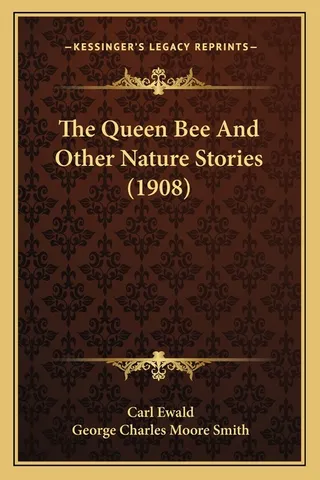
The Queen Bee and Other Nature Stories - The Original Classic Edition
Report an issue
Tell us what's wrong and we'll take a look.
Thanks – we got it. We'll review and follow up if needed.
This is a new and freshly published edition of this culturally important work by Carl Ewald, which is now, at last, again available to you.
Get the PDF and EPUB NOW as well. Included in your purchase you have The Queen Bee and Other Nature Stories in EPUB AND PDF format to read on any tablet, eReader, desktop, laptop or smartphone simultaneous - Get it NOW.
Enjoy this classic work today. These selected paragraphs distill the contents and give you a quick look inside The Queen Bee and Other Nature Stories:
Look inside the book:
So it happened that on the very night of her coming she went straight to the anemones, who stood in their green kerchiefs and didn't know how to hold out any longer. ...The bear stretched himself out and closed his eyes; but he got no sleep that time, for the other trees had heard his story, and they began chattering and talking and rustling their leaves in a way never known in the wood before. ...'Well, I've got my seeds put out in the world all right,' said the burdock, and laughed as if much pleased with itself; 'but it is impossible to say what will become of the thistle and the dandelion, and the harebell and the poppy.'
About Carl Ewald, the Author:
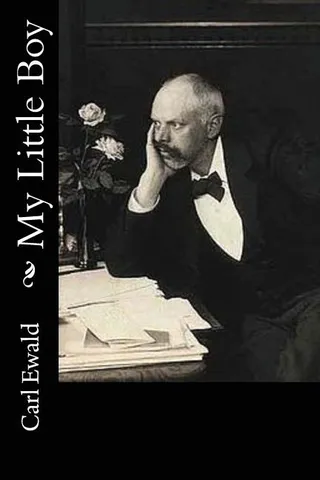
Carl Ewald (15. oktober 1856 på Bredelykke i Gram i Slesvig – 23. februar 1908), var en dansk forfatter, der særligt er kendt for sine darwinistisk inspirerede kunsteventyr om naturen. ...Han begyndte at skrive bøger og udgav i 1880'erne en række problembøger i tidens stil om bl.a. kønsroller og børneopdragelse og udfoldede sig i årene derefter med stor energi i snart sagt alle genrer.
Carl Ewald
Carl Ewald was a Danish novelist, essayist, and satirist best remembered for his literary fairy tales and subtle social commentary. Born on October 15, 1856, in the Duchy of Schleswig, he was the son of Herman Frederik Ewald, a clergyman and writer. His early life was shaped by Denmark's political tensions and cultural shifts, which later influenced his satirical tone. Educated in Copenhagen, he initially pursued a career in forestry before turning to literature full time. His prose is characterized by clarity, irony, and a blend of whimsy with pointed critique, often using allegory to reflect on societal hypocrisy and human frailty. Ewald s fairy tales were not solely for children; they carried layers of meaning that appealed to adult readers and explored questions of morality, tradition, and individuality. His private life was complex he had two sons, Jesper Ewald and Poul Henningsen, the latter becoming a renowned architect and critic. Though Ewald died relatively young at 51 in Charlottenlund on February 23, 1908, his influence endured through his descendants and his sharp yet elegant body of work, which remains part of Danish literary heritage.
More by Carl Ewald




Why Readwise Books?
Readwise Books is an ebook & audiobook platform that automatically logs how much you and your friends read, making it fun and easy to read more. Learn more →