Danish Through Carl Ewald's Tales
Collection No. 1: Interlinear English Translation for Learners
Report an issue
Tell us what's wrong and we'll take a look.
Thanks – we got it. We'll review and follow up if needed.
This is the first book in the Carl Ewald Tales series of interlinear translations by LingoLuv. This book is designed to make your new language feel useful and fun as early as possible.
The Author and the TalesCarl Ewald (1856-1908), a prolific writer in general, is best remembered for his Æventyr ("Fairy Tales"/"Adventures"), most of which he published as a series consisting of 20 volumes. The first Samling ("collection"), which you are about to read, was published in 1892. Ewald had a unique gift for blending scientific observation with sharp social satire, often using forces of nature and the lives of animals to comment on the human hierarchies of his time.
A Note on the Danish TextBecause this text was written before the major Danish spelling reforms, you will notice a specific "old-world" flair. We have made one modern adjustment: we changed the traditional aa to the modern å to make the text less distracting for contemporary learners.
However, we have retained the capitalisation of all nouns. While this reflects the original 19th-century style, it also serves as a secret weapon for learners: it helps you instantly distinguish nouns from other types of words, providing a helpful structural map as you navigate the sentences.
Why Interlinear Translation?This book utilises interlinear translation, one of the oldest and, to this day, most powerful tools for rapid language acquisition. By placing the translation directly beneath the source text, your brain maps meaning to form in real-time, eliminating the "dictionary fatigue" that often stalls reading and learning.
How to Use This BookThe text is organised into line doublets and triplets:
Line 1: The original Danish text.
Line 2: A literal, word-for-word translation. Words in round brackets represent elements that are necessary for English grammar but absent in Danish, or Danish forms that exist in the original but are redundant in English. This helps you "see" the skeleton of the Danish language, and makes the translation more fluent.
Line 3: Where a literal translation isn't enough - such as with metaphors, wordplay, or complex idioms - the third line provides a natural, idiomatic translation. You will also find occasional notes on grammar, culture etc. here.
Expert GuidanceThe translations in this volume were crafted by an author with a PhD in Linguistics and Translation Studies. Drawing on years of experience teaching literary translation at the university level, these translations are built on applied didactic principles. Every passage, no matter how difficult, has been carefully tuned to be both understandable and engaging.
Your Path to FluencyThis book is recommended for learners at the A2 level (CEFR) or higher. By the time you can read these stories with almost no assistance from the translations, you will have progressed to approximately a B2 level of reading proficiency. Since it contains textually unaltered original stories, more advanced learners will also enjoy this book, and there is something new to learn in each story.
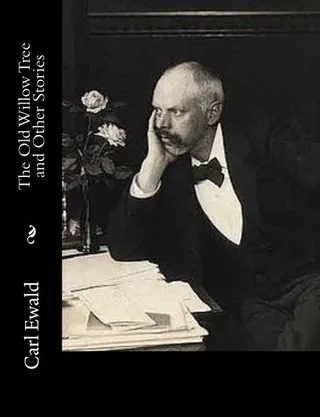
Carl Ewald
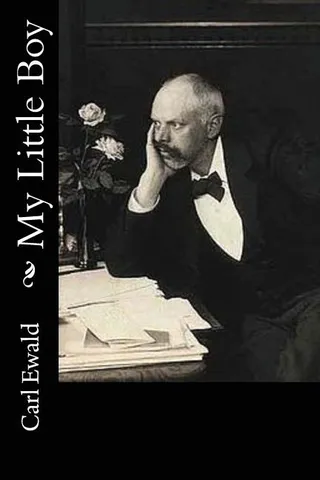
Carl Ewald was a Danish novelist, essayist, and satirist best remembered for his literary fairy tales and subtle social commentary. Born on October 15, 1856, in the Duchy of Schleswig, he was the son of Herman Frederik Ewald, a clergyman and writer. His early life was shaped by Denmark's political tensions and cultural shifts, which later influenced his satirical tone. Educated in Copenhagen, he initially pursued a career in forestry before turning to literature full time. His prose is characterized by clarity, irony, and a blend of whimsy with pointed critique, often using allegory to reflect on societal hypocrisy and human frailty. Ewald s fairy tales were not solely for children; they carried layers of meaning that appealed to adult readers and explored questions of morality, tradition, and individuality. His private life was complex he had two sons, Jesper Ewald and Poul Henningsen, the latter becoming a renowned architect and critic. Though Ewald died relatively young at 51 in Charlottenlund on February 23, 1908, his influence endured through his descendants and his sharp yet elegant body of work, which remains part of Danish literary heritage.
More by Carl Ewald





Why Readwise Books?
Readwise Books is an ebook & audiobook platform that automatically logs how much you and your friends read, making it fun and easy to read more. Learn more →