Report an issue
Tell us what's wrong and we'll take a look.
Thanks – we got it. We'll review and follow up if needed.
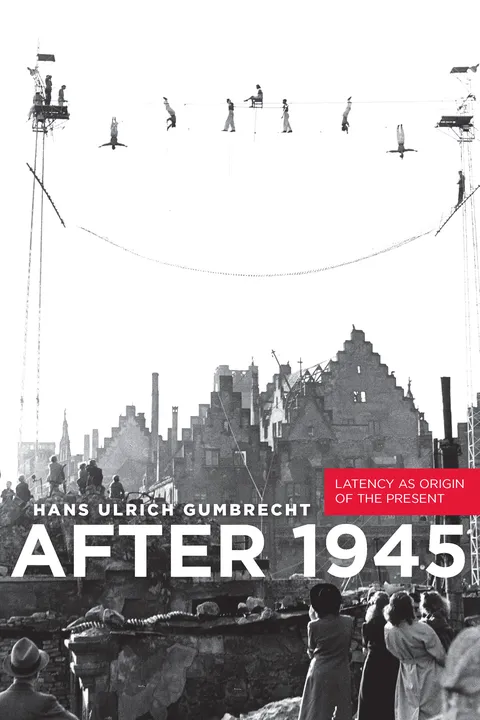
What is it the legacy that humankind has been living with since 1945? We were once convinced that time was the agent of change. But in the past decade or two, our experience of time has been transformed. Technology preserves and inundates us with the past, and we perceive our future as a set of converging and threatening inevitabilities: nuclear annihilation, global warming, overpopulation. Overwhelmed by these horizons, we live in an ever broadening present. In identifying the prevailing mood of the post-World War II decade as that of "latency," Gumbrecht returns to the era when this change in the pace and structure of time emerged and shows how it shaped the trajectory of his own postwar generation.
Those born after 1945, and especially those born in Germany, would have liked nothing more than to put the catastrophic events and explosions of the past behind them, but that possibility remained foreclosed or just out of reach. World literatures and cultures of the postwar years reveal this to have been a broadly shared predicament: they hint at promises unfulfilled and obsess over dishonesty and bad faith; they transmit the sensation of confinement and the inability to advance.
After 1945 belies its theme of entrapment. Gumbrecht has never been limited by narrow disciplinary boundaries, and his latest inquiry is both far-ranging and experimental. It combines autobiography with German history and world-historical analysis, offering insightful reflections on Samuel Beckett and Paul Celan, detailed exegesis of the thought of Martin Heidegger and Jean Paul Sartre, and surprising reflections on cultural phenomena ranging from Edith Piaf to the Kinsey Report. This personal and philosophical take on the last century is of immediate relevance to our identity today.
Hans Ulrich Gumbrecht
Hans Ulrich Gumbrecht is the Albert Guérard Professor Emeritus in Literature in the Departments of Comparative Literature and French and Italian at Stanford University. As a public intellectual and highly prolific writer, he contributes to fields as diverse as the histories of national literatures in Romance languages, Western philosophical traditions, and forms of aesthetic experience in twenty first-century everyday culture. He has published more than two thousand texts, translated into more than twenty languages. His latest books are Atmosphere, Mood, Stimmung: On a Hidden Potential of Literature (2012), Explosionen der Aufklärung: Diderot, Goya, Lichtenberg, Mozart (2013), After 1945: Latency as Origin of the Present (2013), and Brüchige Gegenwart: Reflexionen und Reaktionen (2019).
More by Hans Ulrich Gumbrecht


Why Readwise Books?
Readwise Books is an ebook & audiobook platform that automatically logs how much you and your friends read, making it fun and easy to read more. Learn more →