Report an issue
Tell us what's wrong and we'll take a look.
Thanks – we got it. We'll review and follow up if needed.
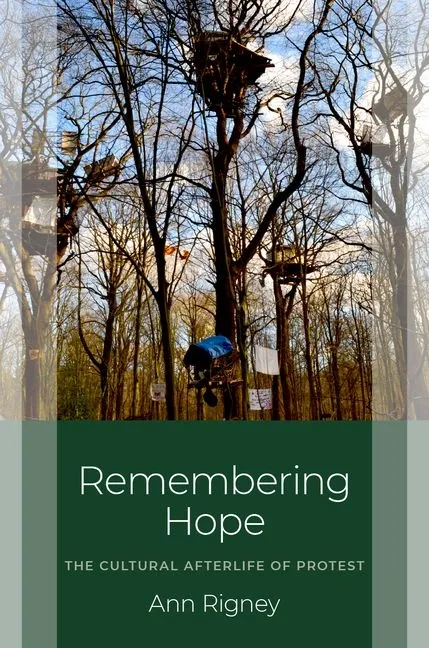
How are social movements remembered and how does that memory impact later mobilizations? Does the memory of earlier defeats inspire or inhibit civil resistance? How does forgetting figure in these dynamics?
In Remembering Hope, Ann Rigney examines the role of storytelling in transferring hope in social transformation from one generation of activists to another. She uses the tools of cultural memory studies to explain how shared narratives about protest are produced using words, images, video, and performance. Referring to a wide range of cultural forms--periodicals, documentaries, archives, photography, but also graffiti and calendars--Rigney argues that storytelling itself intervenes in the present by mobilizing the power of cultural expression to reconnect with the aspirations and energies of predecessors. The changing memory of the Paris Commune is used as a red thread to tie together case studies, ranging from nineteenth-century socialists and anarchists to the Occupy movements of the 2010s and contemporary climate activism, and bring to light both continuities and transformations over time.
Rigney's long-term approach shows that cultural memory and activism are deeply entwined across generations, that protest survives in memory even when the streets are emptied, and that culturally mediated stories provide a resource for activists in articulating new agendas. It reveals how cultural memory work has been used as a form of resistance to historical outcomes and as a tool for kick-starting older campaigns in new contexts. Above all, by demonstrating the cultural transmission of hope, it challenges the assumption that grievance rather than active citizenship has always been at the heart of collective memory.
Ann Rigney
Ann Rigney is Professor of Comparative Literature at Utrecht University. She has published widely on theories of cultural memory and on memory cultures in Europe in the 19th and 20th centuries. Her books include The Afterlives of Walter Scott (OUP, 2021) and Transnational Memory (co-edited with C. De Cesari, De Gruyter, 2014). She is Principal Investigator on the ERC-funded project Remembering Activism: The Cultural Memory of Protest in Europe (ReAct) (2019-2024).
More by Ann Rigney













Why Readwise Books?
Readwise Books is an ebook & audiobook platform that automatically logs how much you and your friends read, making it fun and easy to read more. Learn more →