Report an issue
Tell us what's wrong and we'll take a look.
Thanks – we got it. We'll review and follow up if needed.
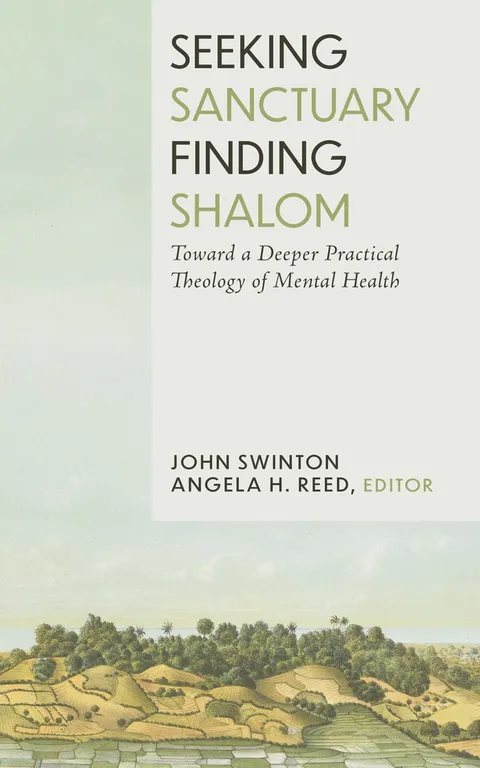
Seeking Sanctuary, Finding Shalom proposes that we think theologically about mental health as a matter of the collective body of human beings and the welfare of creation. Swinton contends that the ways in which we structure creation--relational, social, cultural, political, spiritual--has a profound impact on our mental health. Failing to recognize the broader dimensions of the task of mental healthcare, we might only ease the severity of a pain or a disease without removing the cause and so never offer genuine healing that brings about peaceable connection with God, self, others, and creation.
Guided by the biblical concept of shalom--a form of peace crucial for our understanding of mental health(care)--Swinton takes into consideration the complex and creational roots of human psychological suffering and offers a model of human flourishing defined not by the absence of pain, suffering, and distress, but rather by the presence of God. Such a model seeks not only to deal with the immediacy of the human plight but also to view it within the context of Jesus's cosmic mission to reconcile himself with all things. And so, Swinton contends, as we broaden our conception of mental wholeness to encompass creation at large--the land under our feet, the air in our lungs, the geographical places in which we live and love, as well as the spheres of politics, economics, and culture--we begin the hard and necessary work of repairing dissonance, instability, and mental ill-health. This book does not offer a comprehensive strategy, but it does gesture toward a more holistic, more Christoform theology of mental health. Every journey begins with a first step.
John Swinton
John Swinton, PhD, FBA, FRSE, is professor of practical theology and pastoral care at the University of Aberdeen, where he holds the Chair in Divinity and Religious Studies. An ordained minister of the Church of Scotland, he founded the university's Centre for Spirituality, Health and Disability and the Centre for Ministry Studies. His research explores the theological dimensions of health, disability, mental illness, and dementia. His book Dementia: Living in the Memories of God received the 2016 Michael Ramsey Prize for outstanding theological writing. In 2018, he was awarded the Oskar Pfister Award by the American Psychiatric Association for his contribution to the dialogue between theology and psychiatry.
More by John Swinton






Why Readwise Books?
Readwise Books is an ebook & audiobook platform that automatically logs how much you and your friends read, making it fun and easy to read more. Learn more →