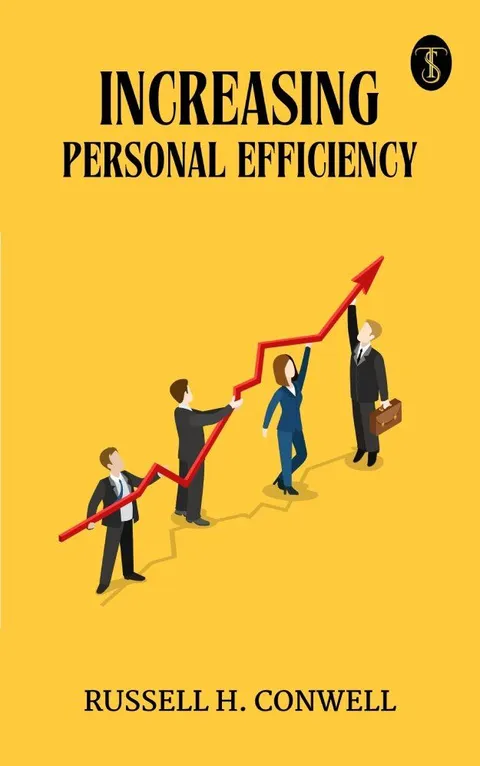
Increasing Personal Efficiency
Report an issue
Tell us what's wrong and we'll take a look.
Thanks – we got it. We'll review and follow up if needed.
"Increasing Personal Efficiency" is a self-help book that delves into the practicalities of enhancing one's productivity and effectiveness in daily life. The text examines the various factors that contribute to personal efficiency, such as time management, goal setting, and prioritization. It advocates for the development of habits that support disciplined work ethics and the maintenance of a balanced lifestyle.
The book often emphasizes the psychological aspects of efficiency, including motivation, mental resilience, and the importance of a positive mindset. It provides strategies to overcome procrastination, manage stress, and maximize individual potential. The guidance offered is typically grounded in psychological principles and is designed to be applicable across various facets of life, whether professional or personal.
Through a combination of theoretical understanding and actionable advice, "Increasing Personal Efficiency" aims to equip readers with the tools they need to achieve greater success and satisfaction from their endeavors. It is a resource intended for those looking to systematically improve their performance and achieve their ambitions more effectively.
Russell H Conwell
Russell Herman Conwell was born on February 15, 1843, in South Worthington, Massachusetts, to Martin Conwell and Miranda Wickham Conwell. Raised on a New England farm, he developed a strong work ethic early in life. He pursued higher education at Yale University and Albany Law School, where he gained experience in both theology and law. His early career included serving as a lawyer, journalist, and soldier during the Civil War, where he displayed leadership and resilience. After the war, he transitioned into ministry, becoming a prominent Baptist preacher known for his compelling public speaking. In Philadelphia, he served as pastor of The Baptist Temple and became a central figure in the city's spiritual and educational life. In 1884, he founded Temple College, later Temple University, aiming to provide educational opportunities to working-class individuals. His widely celebrated lecture, Acres of Diamonds, emphasized the value of finding opportunity in one's immediate surroundings. Through his philanthropy, teaching, and public service, he influenced countless lives and shaped institutions that continue today. Conwell died on December 6, 1925, in Philadelphia and was buried at the Founder's Garden, leaving a legacy grounded in faith, education, and the pursuit of self-betterment.
More by Russell H Conwell




Why Readwise Books?
Readwise Books is an ebook & audiobook platform that automatically logs how much you and your friends read, making it fun and easy to read more. Learn more →