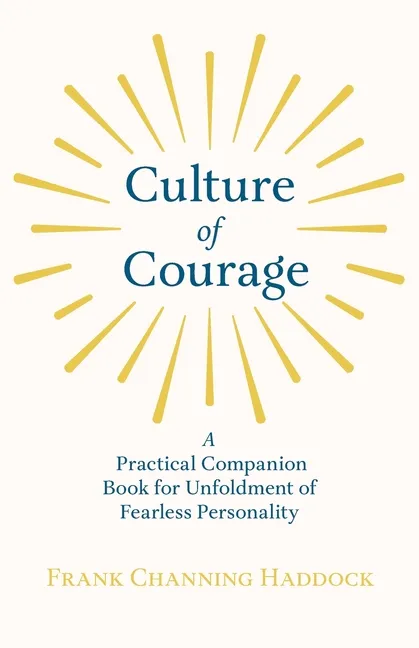
Culture of Courage - A Practical Companion Book for Unfoldment of Fearless Personality; With an Essay from What You Can Do With Your Will Power by Russell H. Conwell
Report an issue
Tell us what's wrong and we'll take a look.
Thanks – we got it. We'll review and follow up if needed.
Self-help books aim to help the reader with problems, offering them clear and effective guidance on how obstacles can be passed and solutions found, especially with regard to common issues and day-to-day life. Such books take their name from the 1859 best-selling "Self-Help" by Samuel Smiles, and are often also referred to as "self-improvement" books. First published in 1910, "Culture Of Courage" is a companion to the Author's work "Unfoldment of Fearless Personality", concentrating on the subject of fear and how it can be overcome to improve one's life. Contents include: "The World's New Dawn", "Fear and Reason", "Physical Tone", "Dual Health-tone of the Self", "Fear of Self", "Fear of Others", "Fear of Things", "The Fears of Timidity", "Some People we Fear", "Some of Life Relations", "The Fearful Crowd", "Fear of Events - Old Age", "Courage for Future Events", etc. Frank Channing Haddock (1853-1915) was an prominent author of New Thought and self-help books most famous for his multi-volume series "The Power-Book Library". Many vintage books such as this are becoming increasingly scarce and expensive. We are republishing this volume now in an affordable, modern, high-quality edition complete with an introductory essay from Russell H. Conwell's " What You Can Do With Your Will Power".


Russell H Conwell
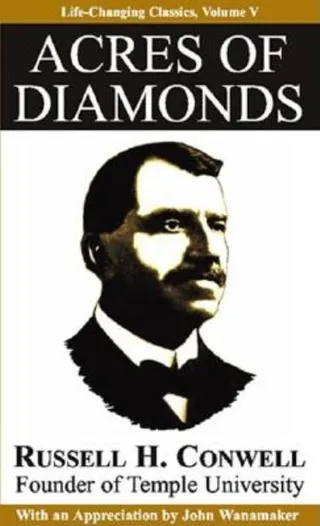
Russell Herman Conwell was born on February 15, 1843, in South Worthington, Massachusetts, to Martin Conwell and Miranda Wickham Conwell. Raised on a New England farm, he developed a strong work ethic early in life. He pursued higher education at Yale University and Albany Law School, where he gained experience in both theology and law. His early career included serving as a lawyer, journalist, and soldier during the Civil War, where he displayed leadership and resilience. After the war, he transitioned into ministry, becoming a prominent Baptist preacher known for his compelling public speaking. In Philadelphia, he served as pastor of The Baptist Temple and became a central figure in the city's spiritual and educational life. In 1884, he founded Temple College, later Temple University, aiming to provide educational opportunities to working-class individuals. His widely celebrated lecture, Acres of Diamonds, emphasized the value of finding opportunity in one's immediate surroundings. Through his philanthropy, teaching, and public service, he influenced countless lives and shaped institutions that continue today. Conwell died on December 6, 1925, in Philadelphia and was buried at the Founder's Garden, leaving a legacy grounded in faith, education, and the pursuit of self-betterment.
More by Russell H Conwell



Why Readwise Books?
Readwise Books is an ebook & audiobook platform that automatically logs how much you and your friends read, making it fun and easy to read more. Learn more →