Report an issue
Tell us what's wrong and we'll take a look.
Thanks – we got it. We'll review and follow up if needed.
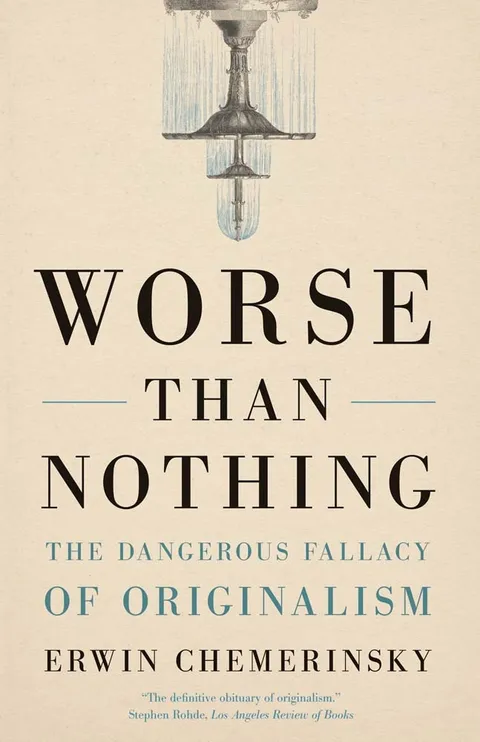
"Chemerinsky . . . offers a concise, point-by-point refutation of the theory [of originalism]. He argues that it cannot deliver what it promises--and if it could, no one would want what it is selling."--David Cole, New York Review of Books
Originalism, the view that the meaning of a constitutional provision is fixed when it is adopted, was once the fringe theory of a few extremely conservative legal scholars but is now a well-accepted mode of constitutional interpretation. Three of the Supreme Court's nine justices explicitly embrace the originalist approach, as do increasing numbers of judges in the lower courts.
Noted legal scholar Erwin Chemerinsky gives a comprehensive analysis of the problems that make originalism unworkable as a method of constitutional interpretation. He argues that the framers themselves never intended constitutional interpretation to be inflexible and shows how it is often impossible to know what the "original intent" of any particular provision was. Perhaps worst of all, though its supporters tout it as a politically neutral and objective method, originalist interpretation tends to disappear when its results fail to conform to modern conservative ideology.
Erwin Chemerinsky
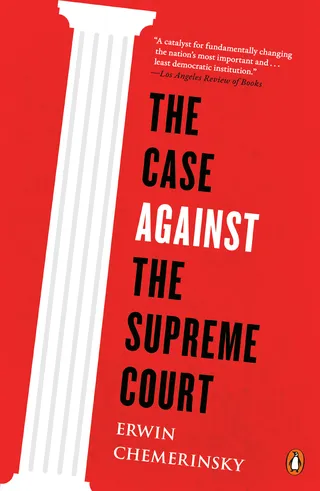
Erwin Chemerinsky is the dean of the University of California, Berkeley, School of Law. The author of Presumed Guilty, The Conservative Assault on the Constitution, and The Case Against the Supreme Court, among many other works, he lives in Oakland, California.
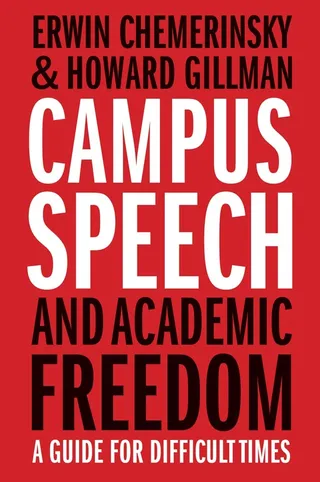
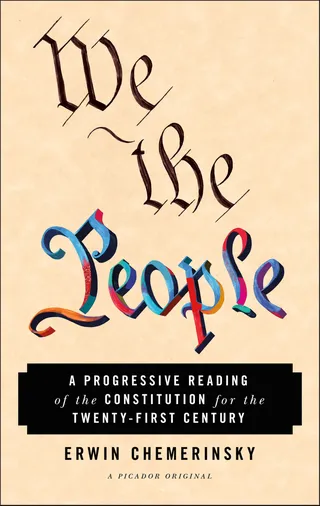
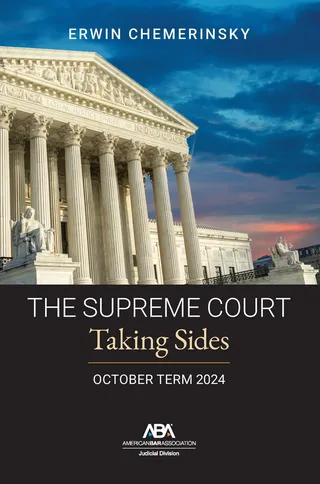
More by Erwin Chemerinsky






Why Readwise Books?
Readwise Books is an ebook & audiobook platform that automatically logs how much you and your friends read, making it fun and easy to read more. Learn more →