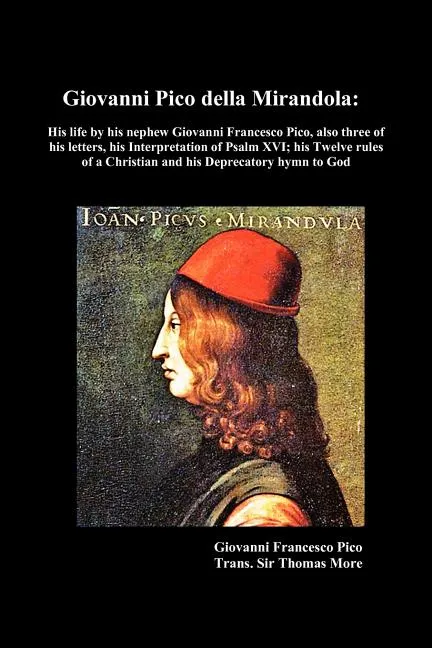
Giovanni Pico Della Mirandola
His Life by His Nephew Giovanni Francesco Pico, Also Three of His Letters, His Interpretation of Psalm XVI; His Twelve
Report an issue
Tell us what's wrong and we'll take a look.
Thanks – we got it. We'll review and follow up if needed.
Thomas More
Thomas More balanced public duty with deep moral conviction, leaving a legacy shaped by intellect and principle. Born in 1478 in London, he rose to become a lawyer, scholar, and Lord Chancellor under Henry VIII before his dramatic fall from favor. A philosophy grounded in conscience, faith, and humanist ideals guided his life, often placing moral truth above political power.Intellectual curiosity and social critique define the heart of his work. In works such as Utopia, he crafted a cohesive and fluid vision of an ideal society governed by reason, communal life, and moral order, contrasting it with the injustices of his own time. Thoughtful narrative reveals how justice, discipline, and shared responsibility intertwine, inviting readers to question the structures of society.Enduring influence has made him a central figure in philosophy, politics, and literature. Readers and thinkers across centuries have debated and drawn from his ideas on society, governance, and moral responsibility. Today, his work remains widely read, valued for its insight, courage, and lasting impact on political thought and literary tradition.
More by Thomas More





Why Readwise Books?
Readwise Books is an ebook & audiobook platform that automatically logs how much you and your friends read, making it fun and easy to read more. Learn more →