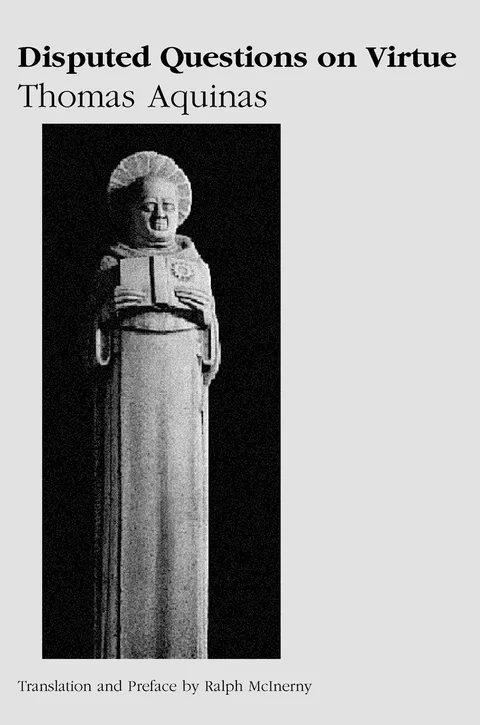
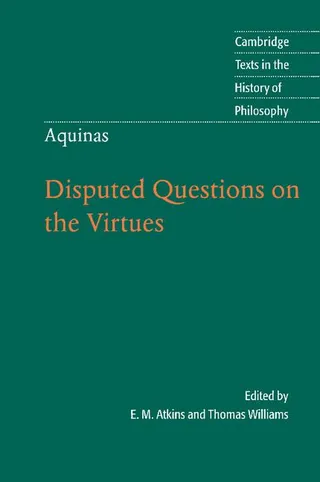
Disputed Questions on Virtue
Quaestio Disputata de Virtutibus in Communi and Quaestio Disputata de Virtutibus Cardinalibus
Report an issue
Tell us what's wrong and we'll take a look.
Thanks – we got it. We'll review and follow up if needed.
These disputed questions are the work of a theologian for whom philosophy was the necessary prerequisite of his discipline. Thomas discusses virtue with reference to the definitions of St. Augustine and Aristotle and develops a distinction between the acquired virtues and the virtues which are infused into the soul by grace. The subtle interactions of the natural and supernatural have never been discussed with more clarity. Justice, prudence, courage, and temperance - the cardinal virtues - are shown to have both acquired and infused instances.
The two series of disputed questions on the subject of virtue are indispensable for the student of the moral teaching of Thomas Aquinas.
Thomas Aquinas
Thomas Aquinas (1225-1274) lived at a critical juncture of western culture when the arrival of the Aristotelian corpus in Latin translation reopened the question of the relation between faith and reason. This crisis flared up just as universities were being founded. Thomas, after early studies at Montecassino, moved on to the University of Naples, where he met members of the new Dominican Order. When he joined the Dominican Order he went north to study with Albertus Magnus, author of a paraphrase of the Aristotelian corpus. Thomas completed his studies at the University of Paris. His theological writings became regulative of the Catholic Church and his close textual commentaries on Aristotle represent a cultural resource which is now receiving increased recognition.
More by Thomas Aquinas








Why Readwise Books?
Readwise Books is an ebook & audiobook platform that automatically logs how much you and your friends read, making it fun and easy to read more. Learn more →