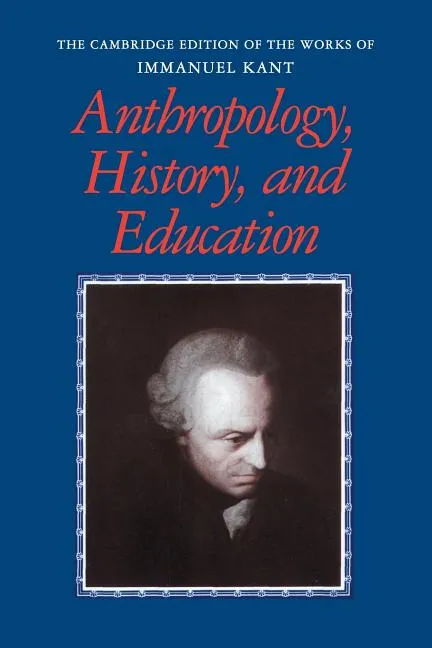
Anthropology, History, and Education
Report an issue
Tell us what's wrong and we'll take a look.
Thanks – we got it. We'll review and follow up if needed.
Anthropology, History, and Education, first published in 2007, contains all of Kant's major writings on human nature. Some of these works, which were published over a thirty-nine year period between 1764 and 1803, had never before been translated into English. Kant's question 'What is the human being?' is approached indirectly in his famous works on metaphysics, epistemology, moral and legal philosophy, aesthetics and the philosophy of religion, but it is approached directly in his extensive but less well-known writings on physical and cultural anthropology, the philosophy of history, and education which are gathered in the present volume. Kant repeatedly claimed that the question 'What is the human being?' should be philosophy's most fundamental concern, and Anthropology, History, and Education can be seen as effectively presenting his philosophy as a whole in a popular guise.
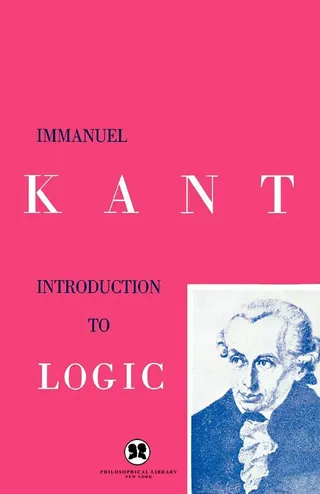
Immanuel Kant
Immanuel Kant (1724-1804) was a renowned German philosopher born on 22 April 1724 in Königsberg, Prussia (now Kaliningrad, Russia). He was one of the most influential thinkers of the Enlightenment and made significant contributions to philosophy, ethics, metaphysics and the theory of knowledge. He believed that human knowledge comes from both experience and reason and emphasised morality, duty, freedom and human dignity. His most famous works include Critique of Pure Reason, Critique of Practical Reason and Groundwork of the Metaphysics of Morals. He spent most of his life teaching and writing in Königsberg and died on 12 February 1804.
More by Immanuel Kant


Why Readwise Books?
Readwise Books is an ebook & audiobook platform that automatically logs how much you and your friends read, making it fun and easy to read more. Learn more →