Report an issue
Tell us what's wrong and we'll take a look.
Thanks – we got it. We'll review and follow up if needed.
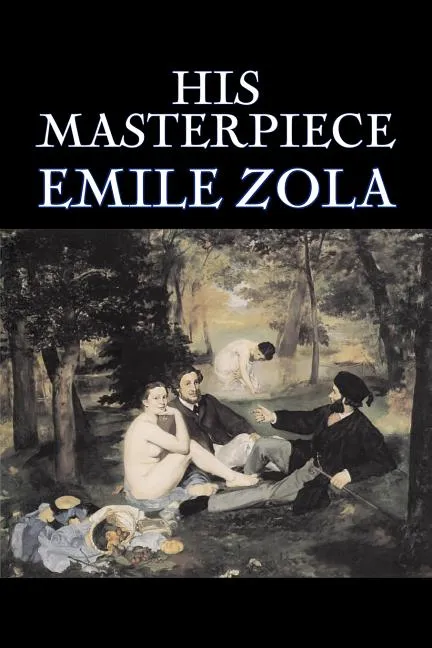
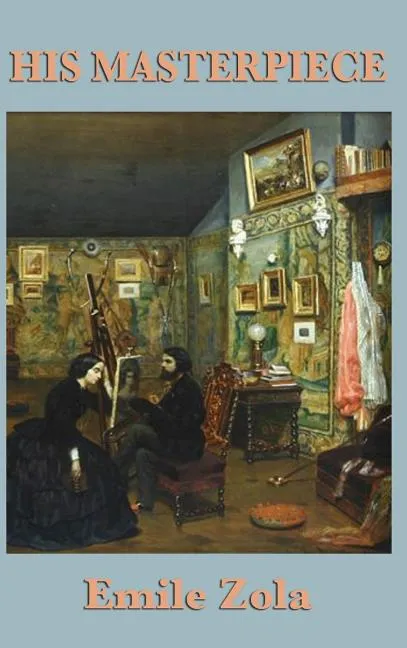
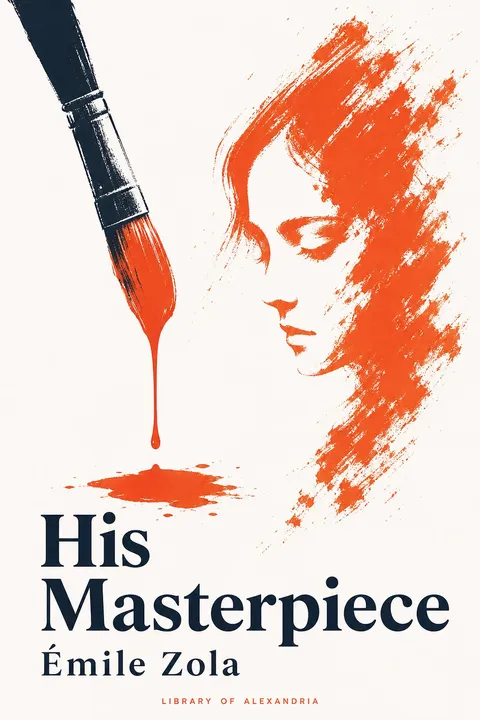
What happens when the pursuit of great art leaves no room for living? In the studios of Paris, a gifted painter stakes everything on a vision he cannot quite bring to life.
Émile Zola's His Masterpiece follows Claude Lantier through the ambitions and disappointments of the nineteenth-century French art world. Committed to breaking with accepted conventions, Claude faces hostile criticism, uncertainty, and the widening distance between what he imagines and what he can paint. Around him, artists and writers struggle for recognition in a city where public judgment can make or destroy a career.
At the heart of the novel is Claude's relationship with Christine, his model and wife, whose love must compete with his consuming devotion to his work. Part of Zola's Rougon-Macquart cycle, this intimate study of creativity brings the bohemian world of studios and exhibitions into sharp focus. Its enduring force lies in an uncomfortable question: when does dedication become obsession, and who bears the cost?
What readers find inside:
- A painter's divided mind - Claude's bold artistic ideals collide with doubt, frustration, and the limits of execution.
- Parisian artistic life - Studios, exhibitions, and friendships reveal a culture caught between innovation and established taste.
- Love under pressure - Christine's relationship with Claude exposes the emotional demands of a life organized around art.
- The hunger for recognition - Public rejection and professional ambition test the bonds between creative companions.
- The cost of creation - Zola examines the damage caused when an imagined achievement becomes more important than ordinary human needs.
For readers of French classics, novels about artists, and psychological fiction, this is a searching portrait of ambition at its most vulnerable. It also speaks to anyone who has struggled to reconcile demanding work with the people they love.
Enter Claude Lantier's Paris and discover a novel that looks unflinchingly at the distance between making art and making a life.
Émile Zola
Émile Zola (2 April 1840 - 29 September 1902) was a French novelist, playwright, journalist, the best-known practitioner of the literary school of naturalism, and an important contributor to the development of theatrical naturalism. He was a major figure in the political liberalization of France and in the exoneration of the falsely accused and convicted army officer Alfred Dreyfus.Zola was nominated for the first and second Nobel Prize in Literature in 1901 and 1902. He wrote every day for around 30 years and is considered to be a significant influence on writers that are credited with the creation of new journalism: Wolfe, Capote, Thompson, Mailer, Didion, Talese and others.
More by Émile Zola



Why Readwise Books?
Readwise Books is an ebook & audiobook platform that automatically logs how much you and your friends read, making it fun and easy to read more. Learn more →