The Subjection Of Women
Report an issue
Tell us what's wrong and we'll take a look.
Thanks – we got it. We'll review and follow up if needed.
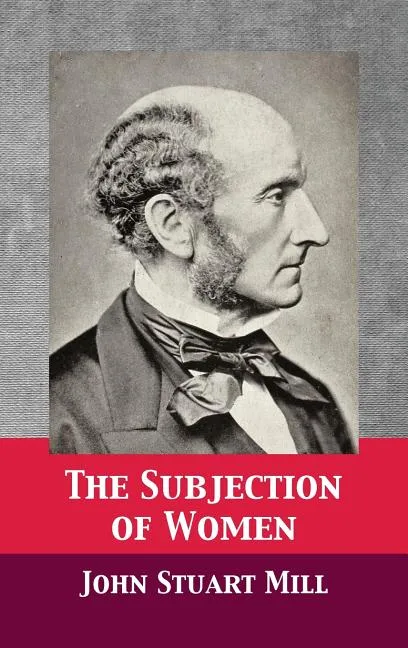
English philosopher, political economist, and civil servant John Stuart Mill wrote an essay titled "The Subjection of Women" in 1869 that contains concepts he and his wife Harriet Taylor Mill jointly developed. Soon after her tragic passing in late 1858, Mill finalized the manuscript for their joint work On Liberty (1859) and continued writing The Subjection of Women until its completion in 1861. The essay's defense of gender equality at the time of its publication was seen as a challenge to European traditional conventions surrounding the standing of men and women. Although most academics concur that John Stuart Mill wrote the article alone, it is also observed that several of the points are similar to those in Harriet Taylor Mill's 1851 essay The Enfranchisement of Women. At the time of writing, Mill understood that he was going against societal norms and that he would have to steadfastly support his statements. Over time, Mill's perspectives on several issues evolved. For a long time, Mill was viewed as a divergent philosopher who wrote on several topics.
John Stuart Mill
John Stuart Mill (1806-1873) was a British political philosopher who wrote on such subjects as logic, economics, ethics, metaphysics, religion, and current affairs. His best-known works include On Liberty, Utilitarianism, The Subjection of Women, A System of Logic, Principles of Political Economy, and his autobiography. He was born in London, the eldest son of the Scottish philosopher, historian, and economist James Mill and educated by his father with the assistance of utilitarian philosopher Jeremy Bentham. Mill's philosophy draws upon empiricism and utilitarianism while modifying these doctrines to incorporate a greater sense of humanity. A strong defender of freedom of thought and expression and an early supporter of the cause of women's rights, Mill remains a towering figure in the development of political liberalism.
More by John Stuart Mill



Why Readwise Books?
Readwise Books is an ebook & audiobook platform that automatically logs how much you and your friends read, making it fun and easy to read more. Learn more →