Report an issue
Tell us what's wrong and we'll take a look.
Thanks – we got it. We'll review and follow up if needed.
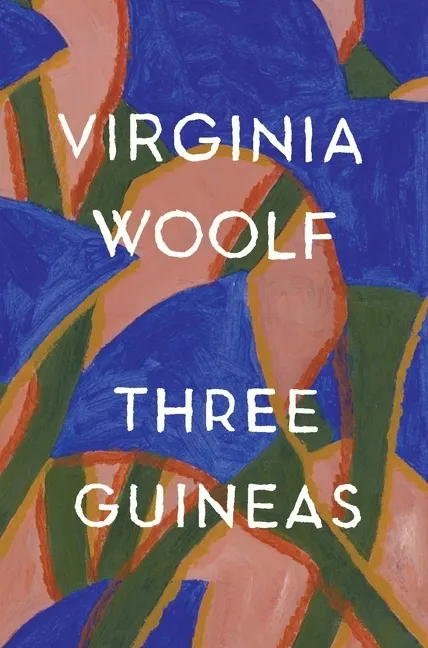
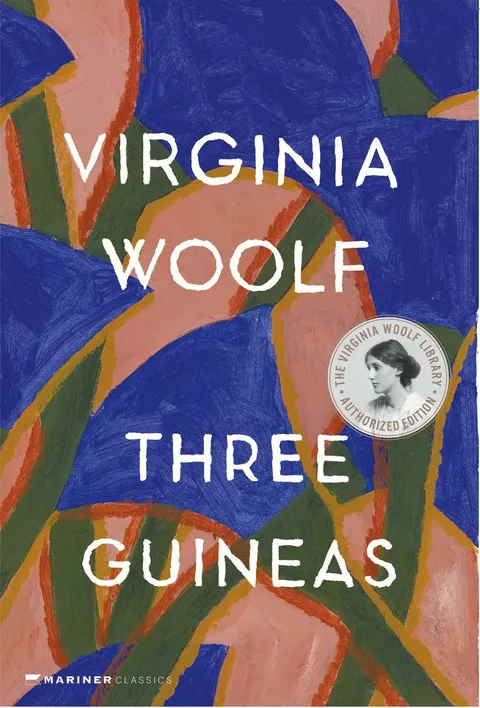
From one of the twentieth century's major literary figures, Three Guineas is written as a series of letters in which Virginia Woolf ponders the efficacy of donating to various causes to prevent war — and a statement of feminine purpose.
Setting out to answer the question “How are we to prevent war?” Virginia Woolf argues that the inequalities between women and men must first be addressed. Framing her arguments in the form of a letter, Woolf wittily ponders to whom — among the many who have requested it — she will donate a guinea.
As she works out her reasons for which causes she will support, Woolf articulates a vision of peace and political culture as radical now as it was when first published on the eve of the Second World War.
A founding text of cultural theory, Three Guineas can also help us understand the twenty-first-century realities of endless war justified by “unreal loyalties.”
“Witty, scornful, deeply serious…If you are a woman, or anti-war, or both, read it.”—The New Yorker
- A Seminal Work of Feminism: Explores the deep connection between the oppression of women in the private sphere and the militarism of the public world, dissecting the concept of patriarchy with piercing insight.
- A Powerful Case for Pacifism: Written on the brink of World War II, Woolf makes a radical argument for peace by questioning the "unreal loyalties" that lead nations and individuals to conflict.
- A Critique of Professional Culture: From the exclusionary traditions of universities to the pomp of the professions, Woolf dismantles the institutions that perpetuate inequality and asks if an outsider can join them without being corrupted.
- Intellectual Liberty: In her characteristically witty and incisive prose, Woolf champions the importance of an independent mind, free from the corrupting influence of money, fame, and prescribed loyalties.
Virginia Woolf
Virginia Woolf was born in 1882, the youngest daughter of the Victorian writer Leslie Stephen. After her father's death, Virginia moved with her sister Vanessa (later Vanessa Bell) and two of her brothers, to 46 Gordon Square, which was to be the first meeting place of the Bloomsbury Group. Virginia married Leonard Woolf in 1912, and together they established the Hogarth Press. Virginia also published her first novel, The Voyage Out, in 1912, and she subsequently wrote eight more, several of which are considered classics, as well as two books of seminal feminist thought. Woolf suffered from mental illness throughout her life and committed suicide in 1941.
More by Virginia Woolf


Why Readwise Books?
Readwise Books is an ebook & audiobook platform that automatically logs how much you and your friends read, making it fun and easy to read more. Learn more →