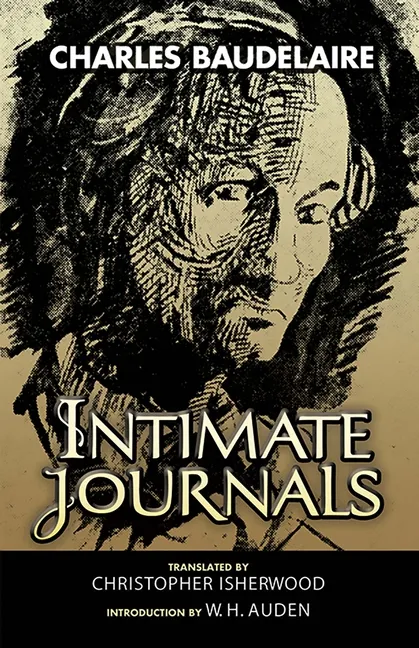
Intimate Journals
Report an issue
Tell us what's wrong and we'll take a look.
Thanks – we got it. We'll review and follow up if needed.
One of the most influential French poets of the nineteenth century, Charles Baudelaire (1821-1867) was also an important art critic and translator. In fact, his translations of Edgar Allan Poe's works are considered classics of French prose. Throughout much of his life, however, Baudelaire was dismissed as a vulgar drug addict preoccupied with sex and death. Prosecuted for obscenity and reeling from one financial disaster to another, he produced a number of literary works that went unrecognized during his lifetime. Perhaps the most significant collection of poetry published in Europe during the nineteenth century, his Flowers of Evil was critically condemned, and the remaining years of his life were marked by a sense of failure, disillusionment, and despair.
This volume of the poet's essays and drawings -- collected and published after his death -- includes cryptic memoranda, literary notes, quotations, rough drafts of prose poems, and personal tirades. More than anything else, they reveal the spiritual underpinnings of his work, transcending the squalor of financial ruin and the torture of physical decline to offer compelling thoughts on his world, society, and philosophy.





Christopher Isherwood
Translated by
Christopher Isherwood (1904-1986) was born outside of Manchester, England. His life in Berlin from 1929 to 1933 inspired The Berlin Stories, which were adapted into a play, a film, and the musical Cabaret. Isherwood immigrated to the United States in 1939. A major figure in twentieth-century fiction and the gay rights movement, he wrote more than twenty books, including the novel A Single Man and his autobiography, Christopher and His Kind.


Why Readwise Books?
Readwise Books is an ebook & audiobook platform that automatically logs how much you and your friends read, making it fun and easy to read more. Learn more →