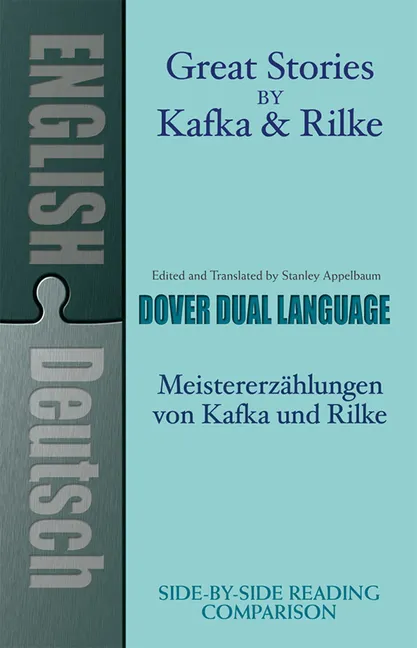
Great Stories by Kafka and Rilke/Meistererzahlungen Von Kafka Und Rilke
A Dual-Language Book
Report an issue
Tell us what's wrong and we'll take a look.
Thanks – we got it. We'll review and follow up if needed.
At the turn of the twentieth century, the city of Prague hosted a cosmopolitan culture whose literary scene abounded in experimental writers. Two of the city's natives are featured in this dual-language volume: Franz Kafka, whose fiction is synonymous with the anguish of modern life; and the poet Rainer Maria Rilke, whose stories unfold in the same transcendent lyricism as his verse.
Twelve of Kafka's stories from the compilation Ein Landarzt (A Country Doctor) appear here, along with two tales from Ein Hungerkünstler (A Hunger Artist). Rilke's stories include "Die Weise von Liebe und Tod des Cornets Christoph Rilke" (The Ballad of Love and Death of Cornet Christoph Rilke), "Die Turnstunde" (The Gym Class), and Geschichten vom lieben Gott (Stories About the Good Lord).
Stanley Appelbaum has provided an introduction and informative notes to these stories, along with excellent new English translations on the pages facing the original German.
Franz Kafka
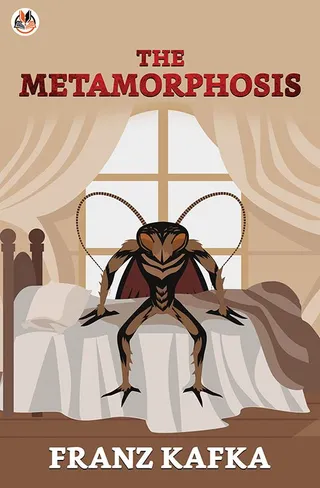
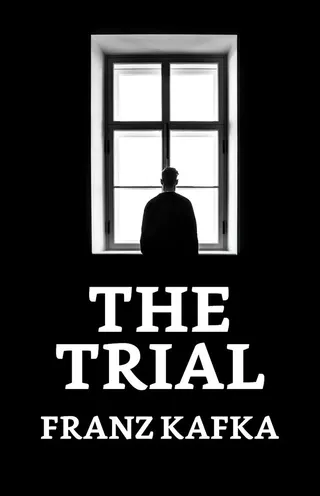
Franz Kafka was born to Jewish parents in Bohemia in 1883. Kafka’s father was a luxury goods retailer who worked long hours and as a result never became close with his son. Kafka’s relationship with his father greatly influenced his later writing and directly informed his Brief an den Vater (Letter to His Father). Kafka had a thorough education and was fluent in both German and Czech. As a young man, he was hired to work at an insurance company where he was quickly promoted despite his desire to devote his time to writing rather than insurance. Over the course of his life, Kafka wrote a great number of stories, letters, and essays, but burned the majority of his work before his death and requested that his friend Max Brod burn the rest. Brod, however, did not fulfill this request and published many of the works in the years following Kafka’s death of tuberculosis in 1924. Thus, most of Kafka’s works were published posthumously, and he did not live to see them recognized as some of the most important examples of literature of the twentieth century. Kafka’s works are considered among the most significant pieces of existentialist writing, and he is remembered for his poignant depictions of internal conflicts with alienation and oppression. Some of Kafka’s most famous works include The Metamorphosis, The Trial and The Castle.
More by Franz Kafka





Why Readwise Books?
Readwise Books is an ebook & audiobook platform that automatically logs how much you and your friends read, making it fun and easy to read more. Learn more →