With No Crying
Report an issue
Tell us what's wrong and we'll take a look.
Thanks – we got it. We'll review and follow up if needed.
'Britain's equivalent to Patricia Highsmith, Celia Fremlin wrote psychological thrillers that changed the landscape of crime fiction for ever: her novels are domestic, subtle, penetrating - and quite horribly chilling.' Andrew Taylor
With No Crying (1980), Celia Fremlin's eleventh novel, tells of Miranda, a daydreaming fifteen-year-old schoolgirl who has encouraged a boy to seduce her and is glad to find herself pregnant, but then bitterly resentful when her parents talk her into an abortion. She pads up her stomach, runs away from home, and finds refuge in a squat where her new housemates await the newborn keenly. How, though, can Miranda save face?
'An acute piece of social observation, psychological insight, and intuitive sympathy that makes for a very satisfying read... Quite brilliant, nicely understated, and tantalisingly real.' Hampstead & Highgate Express
Celia Fremlin
Celia Fremlin (1914–2009) was born in Kent and spent her childhood in Hertfordshire, before studying at Oxford. During World War II, she served as an air-raid warden before becoming involved with the Mass Observation Project, collaborating on a study of women workers, War Factory. After the loss of her husband and youngest daughter to separate tragedies, Fremlin briefly relocated to Geneva. In 1985, she married Leslie Minchin, with whom she lived until his death in 1999. Over four decades, Fremlin wrote sixteen celebrated novels—including the classic summer holiday mystery Uncle Paul—one book of poetry and three short-story collections. Her debut novel The Hours Before Dawn won the Edgar Award in 1960.
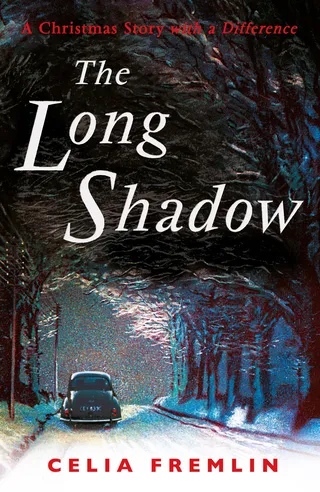
More by Celia Fremlin







Why Readwise Books?
Readwise Books is an ebook & audiobook platform that automatically logs how much you and your friends read, making it fun and easy to read more. Learn more →