Report an issue
Tell us what's wrong and we'll take a look.
Thanks – we got it. We'll review and follow up if needed.
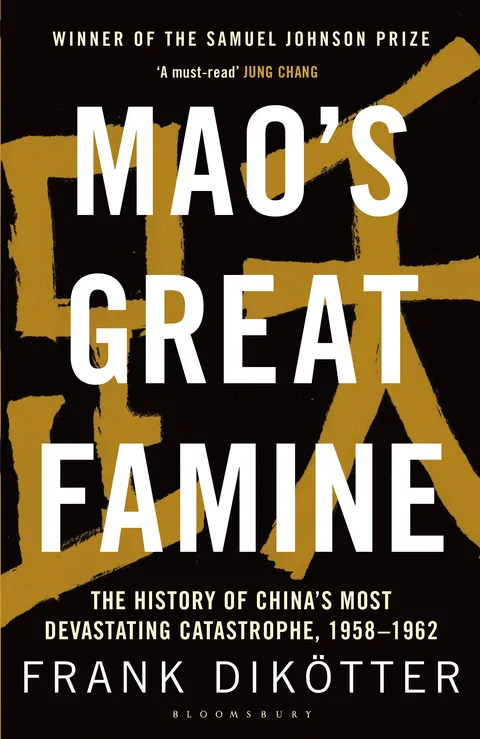
Winner of the Samuel Johnson Prize
An unprecedented, groundbreaking history of China's Great Famine that recasts the era of Mao Zedong and the history of the People's Republic of China.
"Between 1958 and 1962, China descended into hell. Mao Zedong threw his country into a frenzy with the Great Leap Forward, an attempt to catch up to and overtake Britain in less than 15 years The experiment ended in the greatest catastrophe the country had ever known, destroying tens of millions of lives." So opens Frank Dikötter's riveting, magnificently detailed chronicle of an era in Chinese history much speculated about but never before fully documented because access to Communist Party archives has long been restricted to all but the most trusted historians. A new archive law has opened up thousands of central and provincial documents that "fundamentally change the way one can study the Maoist era." Dikötter makes clear, as nobody has before, that far from being the program that would lift the country among the world's superpowers and prove the power of Communism, as Mao imagined, the Great Leap Forward transformed the country in the other direction. It became the site not only of "one of the most deadly mass killings of human history,"--at least 45 million people were worked, starved, or beaten to death--but also of "the greatest demolition of real estate in human history," as up to one-third of all housing was turned into rubble). The experiment was a catastrophe for the natural world as well, as the land was savaged in the maniacal pursuit of steel and other industrial accomplishments. In a powerful mesghing of exhaustive research in Chinese archives and narrative drive, Dikötter for the first time links up what happened in the corridors of power-the vicious backstabbing and bullying tactics that took place among party leaders-with the everyday experiences of ordinary people, giving voice to the dead and disenfranchised. His magisterial account recasts the history of the People's Republic of China.
Frank Dikötter
Frank Dikotter is Chair Professor of Humanities at the University of Hong Kong. Before moving to Asia in 2006, he was a professor of the modern history of China at the University of London. He has published ten books about the history of China, including Mao's Great Famine, which won the BBC Samuel Johnson Prize for Nonfiction in 2011, and The Tragedy of Liberation, which was short-listed for the George Orwell Prize. He lives in Hong Kong.
More by Frank Dikötter







Why Readwise Books?
Readwise Books is an ebook & audiobook platform that automatically logs how much you and your friends read, making it fun and easy to read more. Learn more →