Report an issue
Tell us what's wrong and we'll take a look.
Thanks – we got it. We'll review and follow up if needed.
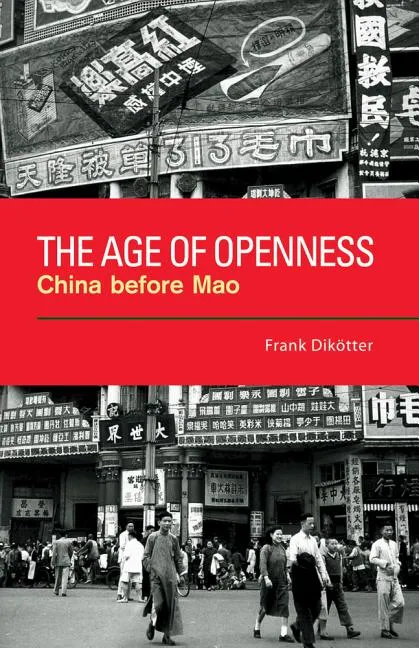
The era between empire and communism is routinely portrayed as a catastrophic interlude in China's modern history. But in this book, Frank Dikötter shows that the first half of the twentieth century was characterized by unprecedented openness. He argues that from 1900 to 1949, all levels of Chinese society were seeking engagement with the rest of the world and that pursuit of openness was particularly evident in four areas: governance, including advances in liberties and the rule of law; greater freedom of movement within the country and outside it; the spirited exchange of ideas in the humanities and sciences; and thriving and open markets and the resulting sustained growth in the economy.
Copub: Hong Kong University Press
Frank Dikötter
Frank Dikotter is Chair Professor of Humanities at the University of Hong Kong. Before moving to Asia in 2006, he was a professor of the modern history of China at the University of London. He has published ten books about the history of China, including Mao's Great Famine, which won the BBC Samuel Johnson Prize for Nonfiction in 2011, and The Tragedy of Liberation, which was short-listed for the George Orwell Prize. He lives in Hong Kong.
More by Frank Dikötter


Why Readwise Books?
Readwise Books is an ebook & audiobook platform that automatically logs how much you and your friends read, making it fun and easy to read more. Learn more →