Nihilism and Nietzsche
Report an issue
Tell us what's wrong and we'll take a look.
Thanks – we got it. We'll review and follow up if needed.

Regarded as one of the most profound German philosophers, Friedrich Nietzsche (1844-1900) is popularly considered a cultural critic and philologist whose work exerted a scholarly influence on modern intellectual history. His intellectual works focus on widespread themes such as religion, morality, philosophy, and science. Prominent elements of his philosophy include his radical critique of truth, a genealogical criticism of religion, and Christian morality. His body of work touched a wide range of topics, including art, philology, history, music, tragedy, and culture, most of which drew inspiration from Greek tragedy.
Friedrich Nietzsche
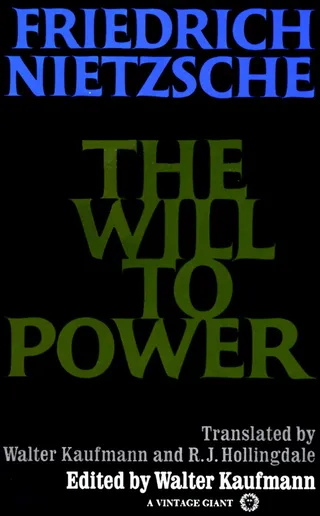
Friedrich Nietzsche was a German philosopher and author. Born into a line of Protestant churchman, Nietzsche studied Classical literature and language before becoming a professor at the University of Basel in Switzerland. He became a philosopher after reading Schopenhauer, who suggested that God does not exist, and that life is filled with pain and suffering. Nietzsche’s first work of prominence was The Birth of Tragedy in 1872, which contained new theories regarding the origins of classical Greek culture. From 1883 to 1885 Nietzsche composed his most famous work, Thus Spake Zarathustra, in which he famously proclaimed that “God is dead.” He went on to release several more notable works including Beyond Good and Evil and The Genealogy of Morals, both of which dealt with the origins of moral values. Nietzsche suffered a nervous breakdown in 1889 and passed away in 1900, but not before giving us his most famous quote, “From life's school of war: what does not kill me makes me stronger.”
More by Friedrich Nietzsche






Why Readwise Books?
Readwise Books is an ebook & audiobook platform that automatically logs how much you and your friends read, making it fun and easy to read more. Learn more →