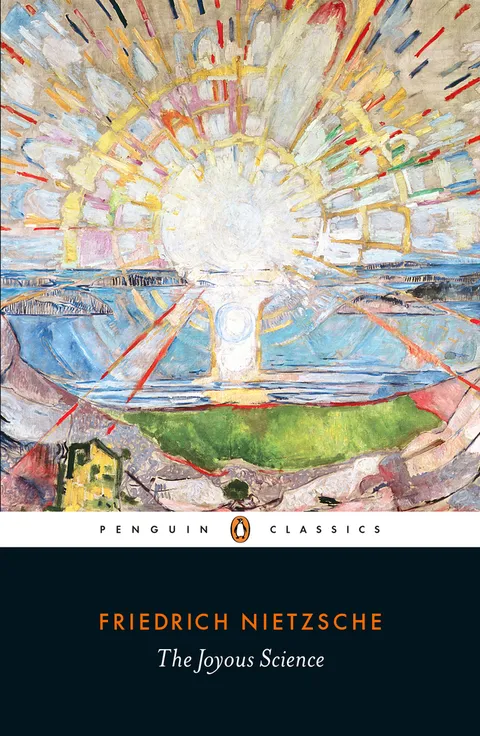
The Joyous Science
Report an issue
Tell us what's wrong and we'll take a look.
Thanks – we got it. We'll review and follow up if needed.
A Penguin Classic
The Joyous Science--also known as The Gay Science and The Joyful Wisdom--is a liberating voyage of discovery as Nietzsche's realization that "God is dead" and his critique of morality, the arts and modernity give way to an exhilarating doctrine of self-emancipation and the concept of eternal recurrence. Here is Nietzsche at his most personal and affirmative; in his words, this is a book of "exuberance, restlessness, contrariety and April showers." With its unique voice and style, its playful combination of poetry and prose, and its invigorating quest for self-emancipation, The Joyous Science is a literary tour de force and quite possibly Nietzsche's best book.
For more than seventy-five years, Penguin has been the leading publisher of classic literature in the English-speaking world. With more than 2,000 titles, Penguin Classics represents a global bookshelf of the best works throughout history and across genres and disciplines. Readers trust the series to provide authoritative texts enhanced by introductions and notes by distinguished scholars and contemporary authors, as well as up-to-date translations by award-winning translators.
Friedrich Nietzsche
Friedrich Nietzsche was a German philosopher and author. Born into a line of Protestant churchman, Nietzsche studied Classical literature and language before becoming a professor at the University of Basel in Switzerland. He became a philosopher after reading Schopenhauer, who suggested that God does not exist, and that life is filled with pain and suffering. Nietzsche’s first work of prominence was The Birth of Tragedy in 1872, which contained new theories regarding the origins of classical Greek culture. From 1883 to 1885 Nietzsche composed his most famous work, Thus Spake Zarathustra, in which he famously proclaimed that “God is dead.” He went on to release several more notable works including Beyond Good and Evil and The Genealogy of Morals, both of which dealt with the origins of moral values. Nietzsche suffered a nervous breakdown in 1889 and passed away in 1900, but not before giving us his most famous quote, “From life's school of war: what does not kill me makes me stronger.”
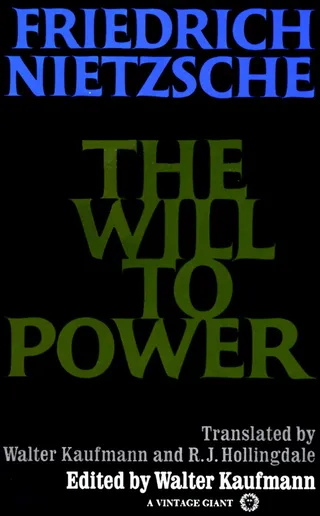
More by Friedrich Nietzsche




R Kevin Hill
Translated by
R. Kevin Hill is Assistant Professor of Philosophy at Portland State University, USA, and has published a number of books and articles on Nietzsche.


Why Readwise Books?
Readwise Books is an ebook & audiobook platform that automatically logs how much you and your friends read, making it fun and easy to read more. Learn more →