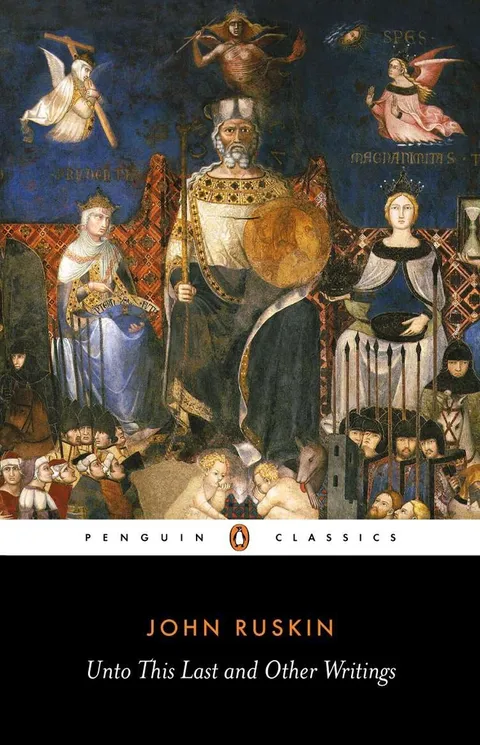
Unto This Last and Other Writings
Report an issue
Tell us what's wrong and we'll take a look.
Thanks – we got it. We'll review and follow up if needed.
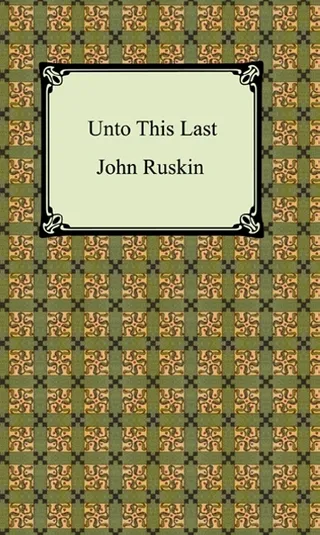
First and foremost an outcry against injustice and inhumanity, Unto this Last is also a closely argued assault on the science of political economy, which dominated the Victorian period. Ruskin was a profoundly conservative man who looked back to the Middle Ages as a Utopia, yet his ideas had a considerable influence on the British socialist movement. And in making his powerful moral and aesthetic case against the dangers of unhindered industrialization he was strangely prophetic. This volume shows the astounding range and depth of Ruskin's work, and in an illuminating introduction the editor reveals the consistency of Ruskin's philosophy and his adamant belief that questions of economics, art and science could not be separated from questions of morality. In Ruskin's words, 'There is no Wealth but Life.'
For more than seventy years, Penguin has been the leading publisher of classic literature in the English-speaking world. With more than 1,700 titles, Penguin Classics represents a global bookshelf of the best works throughout history and across genres and disciplines. Readers trust the series to provide authoritative texts enhanced by introductions and notes by distinguished scholars and contemporary authors, as well as up-to-date translations by award-winning translators.
John Ruskin
John Ruskin was an English writer, philosopher, art expert, and general know-it-all who lived from February 8, 1819, to January 20, 1900. He wrote about a lot of different things, like architecture, mythology, birds, literature, schooling, botany, politics, and the economy. Ruskin was very interested in Viollet le Duc's work and taught it to all of his students, including William Morris. He thought Violet le Duc's Dictionary was "the only book of any value on architecture." Ruskin used a lot of different writing styles and literary types. Besides essays and treatises, he also wrote poems, gave talks, traveled guides and manuals, letters, and even a fairy tale. He also drew and painted scenes with rocks, plants, birds, scenery, buildings, and decorations in great detail. His early writings on art were written in a very complicated style. Over time, he switched to simpler language that was meant to get his ideas across more clearly. He always stressed the links between nature, art, and society in everything he wrote. Up until the First World War, Ruskin had a huge impact on the second half of the 1800s. After a time of decline, his reputation has steadily gotten better since the 1960s, when a lot of academic studies of his work came out.
More by John Ruskin




Why Readwise Books?
Readwise Books is an ebook & audiobook platform that automatically logs how much you and your friends read, making it fun and easy to read more. Learn more →