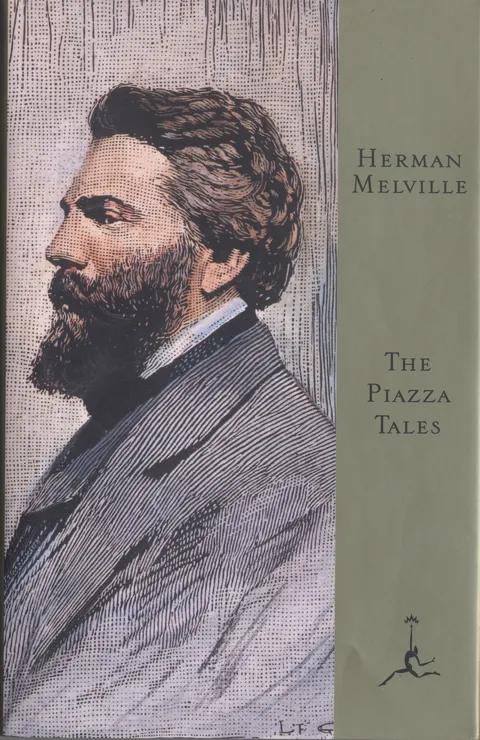
The Piazza Tales
Report an issue
Tell us what's wrong and we'll take a look.
Thanks – we got it. We'll review and follow up if needed.
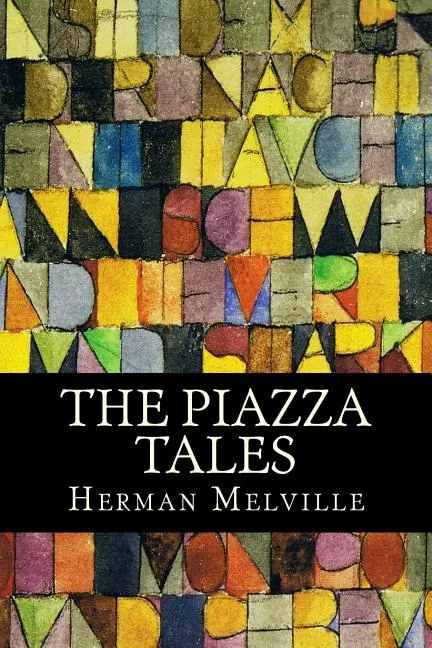

First published in 1856, five years after the appearance of Moby Dick, The Piazza Tales comprises six of Herman Melville's finest short stories. Included are two sea tales that encompass the essence of Melville's art: 'Benito Cereno,' an exhilarating account of mutiny and rescue aboard a disabled slave ship, which is a parable of man's struggle against the forces of evil, and 'The Encantadas,' ten allegorical sketches of the Galapagos Islands, which reveal nature to be both enchanting and horrifying. Two pieces explore themes of isolation and defeat found in Melville's great novels: 'Bartleby, the Scrivener,' a prophetically modern story of alienation and loss on nineteenth-century Wall Street, and 'The Bell-Tower,' a Faustian tale about a Renaissance architect who brings about his own violent destruction. The other two works reveal Melville's mastery of very different writing styles: 'The Lightning-Rod Man,' a satire showcasing his talent for Dickensian comedy, and 'The Piazza,' the title story of the collection, which anticipates the author's later absorption with poetry.
Herman Melville
Herman Melville (1819-1891) was an American author and poet. His writing was often inspired by his youthful experiences at sea and his first books, Typee and Omoo were autobiographical and well received. His later writings, notably Moby Dick, were less lucrative and had little standing amongst literary critics at the time of his death. The first decades of the 20th century saw a dramatic reevaluation of Melville's work where many critics and scholars justly acclaimed his oeuvre as a landmark in American letters.
More by Herman Melville












Why Readwise Books?
Readwise Books is an ebook & audiobook platform that automatically logs how much you and your friends read, making it fun and easy to read more. Learn more →