Report an issue
Tell us what's wrong and we'll take a look.
Thanks – we got it. We'll review and follow up if needed.
An aging lawyer hires a new copyist to help with his firm’s workload, and at first he finds himself pleased with his new employee. Bartleby is quiet, efficient and he doesn’t display any of the loud eccentricities of the firm’s other two copyists, Nippers and Turkey. But one day, when the lawyer asks Bartleby if he will help him compare copies, Bartleby simply replies, “I would prefer not to.” As time goes by and Bartleby’s strange refusals multiply, the lawyer becomes increasingly dumbfounded and Bartleby’s apathy escalates into the ridiculous.
“Bartleby, the Scrivener” is an amusing tale by Herman Melville, author of Moby-Dick, which has been studied and interpreted in countless ways over the years. Some scholars claim that the character of Bartleby is a response to American transcendentalism, while others suggest that he reflects Melville’s disillusionment with his writing career. Whatever the case, “Bartleby, the Scrivener” has become one of the most famous early American short stories, paving the way for other absurdist literature of the nineteenth and twentieth centuries.
HarperCollins brings great works of literature to life in digital format, upholding the highest standards in ebook production and celebrating reading in all its forms. Look for more titles in the HarperCollins short-stories collection to build your digital library.
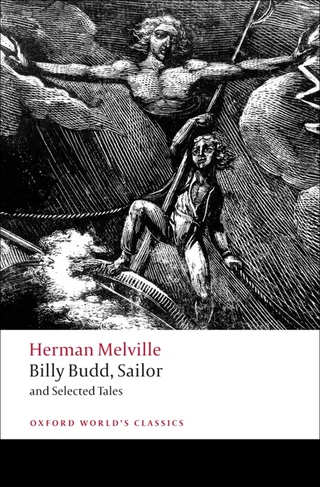
Herman Melville
Herman Melville was born in 1819 in New York City. After his father's death he left school for a series of clerical jobs before going to sea as a young man of nineteen. At twenty-one he shipped aboard the whaler Acushnet and began a series of adventures in the South Seas that would last for three years and form the basis for his first two novels, Typee and Omoo. Although these two novels sold well and gained for Melville a measure of fame, nineteenth-century readers were puzzled by the experiments with form that he began with his third novel, Mardi, and continued brilliantly in his masterpiece, Moby-Dick. During his later years spent working as a customs inspector on the New York docks, Melville published only poems, compiled in a collection entitled Battle-Pieces, and died in 1891 with Billy Budd, Sailor, now considered a classic, still unpublished.
More by Herman Melville




Why Readwise Books?
Readwise Books is an ebook & audiobook platform that automatically logs how much you and your friends read, making it fun and easy to read more. Learn more →