
The Christian Slave
Report an issue
Tell us what's wrong and we'll take a look.
Thanks – we got it. We'll review and follow up if needed.
The Christian Slave is a historical fiction novel by Harriet Beecher Stowe, published in 1855. The story is set in the southern United States during the antebellum period and follows the life of a young slave girl named Emily. Emily is a devout Christian who is mistreated by her owner, Colonel Gaither, and his family. Despite her hardships, Emily remains faithful to her religion and finds comfort in her faith.The novel explores themes of slavery, religion, and social justice. Stowe uses Emily's story to highlight the hypocrisy of slave owners who claim to be Christians but treat their slaves inhumanely. The book also delves into the psychological effects of slavery on both the slaves and their owners.The Christian Slave was written as a response to the Fugitive Slave Act of 1850, which made it illegal to aid runaway slaves. Stowe's novel was intended to raise awareness about the horrors of slavery and to inspire readers to take action against it.The book was well-received by critics and readers alike, and it helped to further fuel the abolitionist movement in the United States. Today, The Christian Slave is considered an important work of literature that sheds light on a dark period in American history.Dramatization of Uncle Tom's Cabin that Ms. Stowe prepared.This scarce antiquarian book is a facsimile reprint of the old original and may contain some imperfections such as library marks and notations. Because we believe this work is culturally important, we have made it available as part of our commitment for protecting, preserving, and promoting the world's literature in affordable, high quality, modern editions, that are true to their original work.
Harriet Beecher Stowe
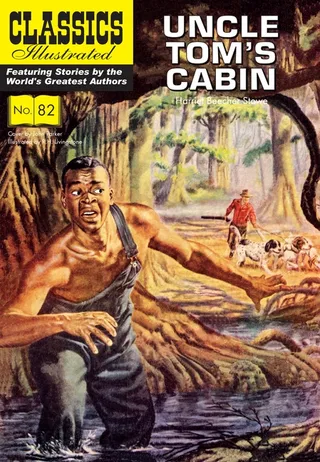
HARRIET BEECHER STOWE began her writing career by writing pieces for magazines to compliment her husbands' meager salary as a professor. She won a short story prize from Western Monthly Magazine, and in 1834, her short-story collection The Mayflower was published. At this time, Stowe was living in Cincinnati, Ohio, which was just across the river from the slave trade and gave her the impetus to write Uncle Tom's Cabin.
In 1850, the family movied to Boston at the height of the public furor over the 1850 Fugitive Slave Law, which mandated the return of runaway slaves already in the North to their owners. Stowe set about writing a novel illustrating the moral responsibility of the entire nation for the cruel system. She forwarded the first episodes to the editor of the Washington anti-slavery weekly, The National Era, where it was published it in 40 installments. Although many Northerners considered slavery a political institution for which they had no personal responsibility, Uncle Tom's Cabin was becoming a national sensation.
The episodes attracted the attention of Boston publisher, J. P. Jewett, who published the work in March of 1852. Uncle Tom's Cabin immediately broke all sales records of the day: selling half-a-million copies by 1857. Stowe went on to many other literary projects, producing about a book a year from 1862 to 1884, but she is still most remembered as the author of Uncle Tom's Cabin.
More by Harriet Beecher Stowe


Why Readwise Books?
Readwise Books is an ebook & audiobook platform that automatically logs how much you and your friends read, making it fun and easy to read more. Learn more →