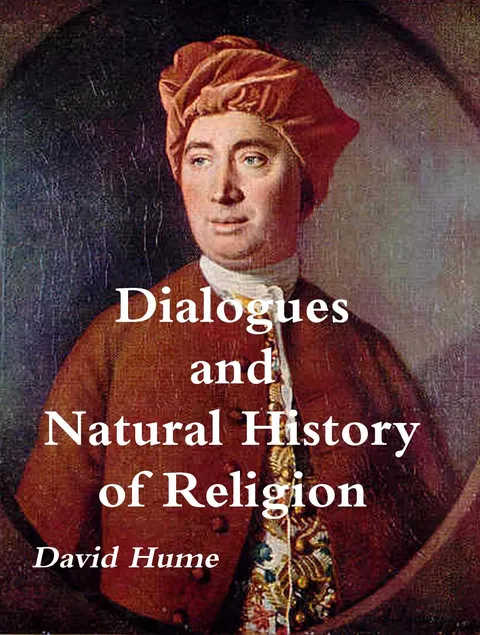
Dialogues and Natural History of Religion
Report an issue
Tell us what's wrong and we'll take a look.
Thanks – we got it. We'll review and follow up if needed.
In "Dialogues", three characters debate the nature of God's existence. While all three agree that a god exists, they differ sharply in opinion on God's nature or attributes and how, or if, humankind can come to knowledge of a deity. Other topics debated include the argument for 'intelligent design'--for which Hume uses a house--and whether there is more suffering or good in the world (argument from evil). In "History of Religion", Hume pioneers a naturalist account of the causes, effects, and historical development of religious belief. Hume locates the origins of religion in emotion, particularly fear and the desire to control the future. He argues that the drive to dominate or eliminate other beliefs, and to put the primitive, emotional core of religion under a veneer of theology leads to intolerance, intellectual dishonesty, and unnatural moral doctrines.
David Hume
David Hume was an eighteenth-century Scottish philosopher, historian, and essayist, and the author of A Treatise of Human Nature, considered by many to be one of the most important philosophical works ever published.
Hume attended the University of Edinburgh at an early age and considered a career in law before deciding that the pursuit of knowledge was his true calling. Hume’s writings on rationalism and empiricism, free will, determinism, and the existence of God would be enormously influential on contemporaries such as Adam Smith, as well as the philosophers like Schopenhauer, John Stuart Mill, and Karl Popper, who succeeded him. Hume died in 1776.
More by David Hume






Why Readwise Books?
Readwise Books is an ebook & audiobook platform that automatically logs how much you and your friends read, making it fun and easy to read more. Learn more →