Report an issue
Tell us what's wrong and we'll take a look.
Thanks – we got it. We'll review and follow up if needed.
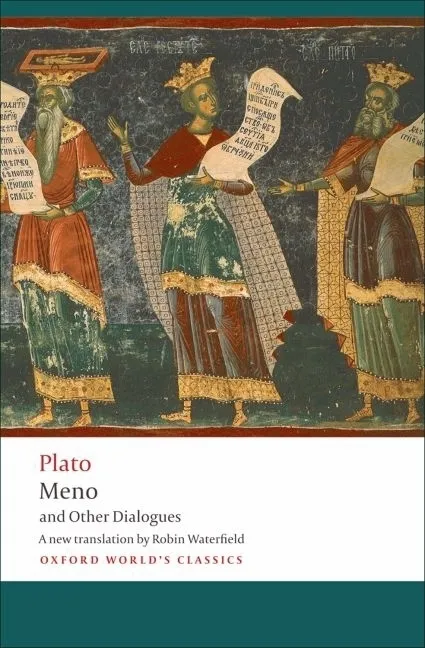
Plato is a major figure in the history of Western philosophy, and these dialogues are an essential part of his work. Robin Waterfield is an acclaimed translator of Plato, Euripedes, Plutarch, and Aristotle. The introduction and notes explain the course of the four dialogues and analyze the philosophical importance of Socrates' questions and arguments, providing an invaluable aid to understanding for student and non-specialist alike.
About the Series: For over 100 years Oxford World's Classics has made available the broadest spectrum of literature from around the globe. Each affordable volume reflects Oxford's commitment to scholarship, providing the most accurate text plus a wealth of other valuable features, including expert introductions by leading authorities, voluminous notes to clarify the text, up-to-date bibliographies for further study, and much more.
Plato
Plato, one of the most renowned ancient Greek philosophers, was born in 427 B.C. to an aristocratic and wealthy family, which played a prominent part in Athenian politics. Plato in conjunction his teacher, Socrates, and his pupil, Aristotle helped to lay the foundations of Western philosophy and culture. While primarily influenced by Socrates, Plato’s work was also affected by the philosophies of Heraclitus, Parmenides, and the Pythagoreans.
Under the guidance of Socrates, Plato devoted himself to the pursuit of wisdom and upon Socrates’ death, joined a group of the Socratic disciples gathered at Megara. Later he travelled in Egypt, Magna Graecia, and Sicily. He returned to Athens and founded a school, known as the Academy, which seems to have been his home base for the remainder of his life.
While thirty-five dialogues and thirteen letters have traditionally been ascribed to Plato, modern scholarship doubts the authenticity of some of them. His early dialogues are also known as the Socratic dialogues and include Apology, Crito, Euthyphro, and Protagoras. He followed these with his transitional dialogues: Gorgias, Meno , and Euthydemus . The Symposium and the Republic are considered the centerpieces of Plato's middle period and are considered some of his most revered work, and other middle dialogues include Phaedo, Phaedrus, and Theaetetus. Plato’s Laws is the best known dialogues of his late period.
Plato died in 347 B.C.
More by Plato







Why Readwise Books?
Readwise Books is an ebook & audiobook platform that automatically logs how much you and your friends read, making it fun and easy to read more. Learn more →