Report an issue
Tell us what's wrong and we'll take a look.
Thanks – we got it. We'll review and follow up if needed.
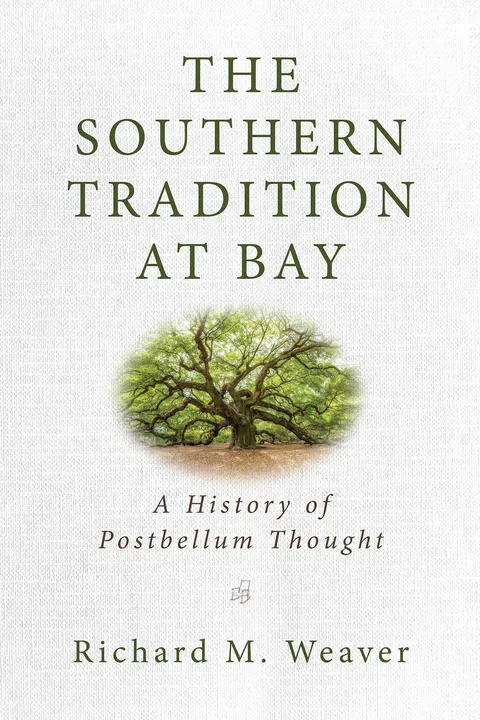
While Richard M. Weaver is best known for the classic Ideas Have Consequences, the foundation of his career was this study of his native South. Calling the Southern tradition "the last non-materialist civilization in the Western world," he traced its roots to feudalism, chivalry, religiosity, and aristocratic conventions. The Old South, he concluded, "may indeed be a hall hung with splendid tapestries in which no one would care to live; but from them we can learn something of how to live."
Weaver’s exploration of the ideals and ideas of the Southern tradition as expressed in the military histories, autobiographies, diaries, and novels of the era following the Civil War—especially those written by the men and women on the losing side—is offered to a new generation of readers for whom that tradition has fallen into disrepute and who can scarcely imagine a life rooted in nature, the soil, and a powerful sense of honor.
The Southern Tradition at Bay is, as Jeffrey Hart noted, the work of a man who admired what "is admirable indeed, and that is the foundation of wisdom and indeed sanity."
Richard M. Weaver
Richard M. Weaver taught for nearly two decades at the University of Chicago before his death in 1963. A student under both John Crowe Ransom and Cleanth Brooks, Weaver was a well-known adherent of the Southern Agrarian school of social criticism. His books and essays have established him as one of the most important and influential philosophers of the twentieth century.
More by Richard M. Weaver


Why Readwise Books?
Readwise Books is an ebook & audiobook platform that automatically logs how much you and your friends read, making it fun and easy to read more. Learn more →