Report an issue
Tell us what's wrong and we'll take a look.
Thanks – we got it. We'll review and follow up if needed.
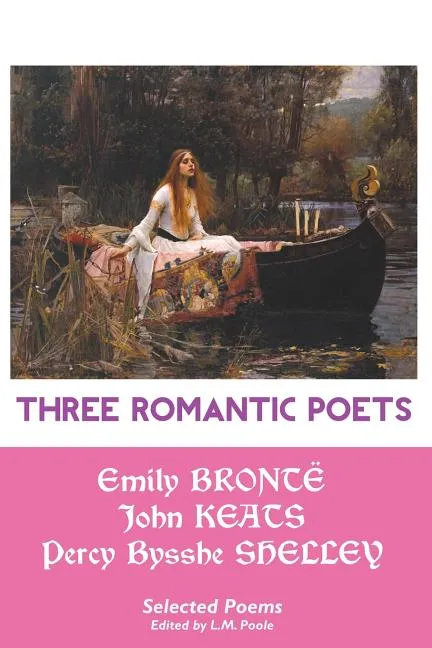
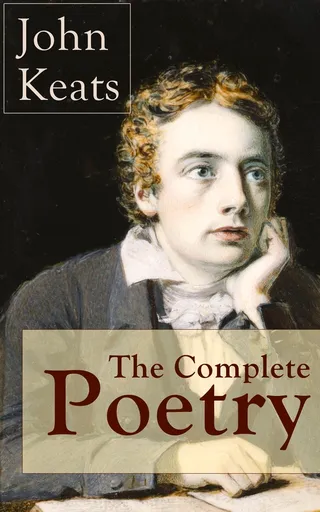
Three great Romantics poets are featured in this anthology - Percy Bysshe Shelley, John Keats and Emily Bronte. The book includes all of their famous poems.
Emily Bronte as a poet is still neglected today. Her novel Wuthering Heights, however, remains one of the great English novels. It continues to sell, continues to be adapted for radio, theatre, film and television, continues to inspire readers and be cited by critics.
The wind whistling through the heather in Winter is indeed the atmosphere of Wuthering Heights, and also of Bronte's poetry. In poem after poem we find loving evocations of the moors: we hear of 'the breezy moor' (in "The starry night shall tidings bring"), the 'flowerless moors' (in "How still, how happy! Those are words"), and of 'the moors where the linnet was trilling/ Its song on the old granite stone' (in "Loud without the wind was roaring", the most powerful of Bronte's moor-poems).
John Keats is one of the few British poets who is truly ecstatic and wild. Despite the overly-ornate language, the often awkward phrases ('made sweet moan' in 'La Belle Dame Sans Merci'), despite the Romantic indulgences and the sometimes chauvinist views, the often over-simplification of natural and human processes and experiences, and despite the tendency to gush and exaggerate, Keats is one of the few poets who write in English who is truly furious and shamanic.
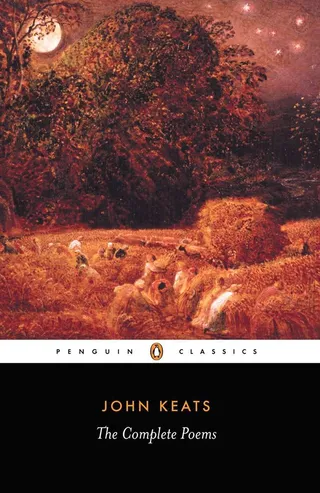
This book gathers the most potent passages from John Keats together, including the famous 'Odes', the sonnets, the luxuriously sensuous 'Eve of St Agnes', the mysterious and atmospheric 'La Belle Dame Sans Merci', and extracts from 'Lamia', Endymion and Hyperion.
Percy Shelley is one of the major British poets, seen by many people as the breathless, hyper-lyrical, angelic yet anarchic poet of the Romantic era, out-doing Lord Byron and John Keats in terms of sheer brilliance. His personality, as with Keats and Byron, is a crucial component in the Shelley legend. Shelley has a cult built up around him.
The book includes a selection of Shelley's odes, hymns and paeans of England's breathless, angelic, anarchic poet. Famous poems, such as 'Ode to the West Wind' and 'The Cloud', are set beside extracts from Prometheus Unbound and Epipsychidion. With an introduction and bibliography for each poet. Plus a portrait gallery for each poet. www.crmoon.com.
Emily Bronte
Emily Brontë (1818-1848) was an English novelist and poet, best remembered for her only novel, Wuthering Heights (1847). A year after publishing this single work of genius, she died at the age of thirty.
More by Emily Bronte


John Keats
John Keats was one of those immensely gifted nineteenth century artists whose work became widely appreciated only after his death. Despite the critics of the day and the fact that death at the tender age of twenty-six prevented him from maturing further as a poet, Keats managed to create some of the greatest lyrical poems ever written.
More by John Keats




Percy Bysshe Shelley
Percy Bysshe Shelley was born on August 4, 1792, at Field Place in Sussex, England, to Timothy Shelley and Elizabeth Pilfold Shelley. Raised in an affluent family, he attended Eton College, where he developed a love for literature and science, and later went on to study briefly at University College, Oxford, from which he was expelled for co-authoring a pamphlet promoting atheism. His personal and intellectual defiance would come to define his life and work. Shelley married Harriet Westbrook in 1811, but the marriage ended in tragedy. In 1816, he married Mary Godwin, daughter of William Godwin and Mary Wollstonecraft, after Harriet s death. Shelley became a central figure in the Romantic movement, forming close associations with literary figures such as Lord Byron and Leigh Hunt. His prose and poetry reflected his passion for political reform, human liberty, and philosophical idealism. Despite facing criticism during his lifetime, Shelley remained dedicated to his ideals. He died on July 8, 1822, in a boating accident off the coast of Lerici, Italy. His contributions to literature were recognized posthumously, securing his place as one of the most influential Romantic poets in the English literary tradition.
More by Percy Bysshe Shelley



Why Readwise Books?
Readwise Books is an ebook & audiobook platform that automatically logs how much you and your friends read, making it fun and easy to read more. Learn more →