
Iphigeneia in Tauris
Report an issue
Tell us what's wrong and we'll take a look.
Thanks – we got it. We'll review and follow up if needed.
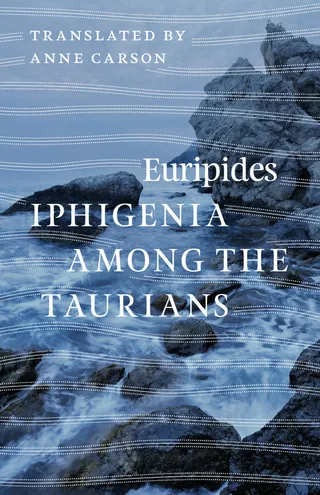
The modern reader may have difficulty conceiving of Iphigeneia in Tauris as tragedy, for the term in our sense is associated with downfall, death, and disaster. But to the ancient Greeks, the use of heroic legend, the tragic diction and meters, and the tragic actors would have defined it as pure tragedy, the happy ending notwithstanding. While not one of his "deep" dramatic works, the play is Euripidean in many respects, above all in its recurrent theme of escape, symbolized in the rescue of Iphigeneia by Artemis, to whom she was about to be sacrificed.
Richmond Lattimore--who has been called the dean of American translators--has translated Iphigeneia in Tauris with skill and subtlety, revealing it as one of the most delicately written and beautifully contrived of the Euripidean "romances."
Euripides
Euripides was a tragedian of classical Athens. He was born on Salamis Island around 480 BC to his mother, Cleito, and father, Mnesarchus, a retailer who lived in a village near Athens. He had two disastrous marriages, and both his wives—Melite and Choerine (the latter bearing him three sons)—were unfaithful. He became a recluse, making a home for himself in a cave on Salamis. Along with Aeschylus and Sophocles, he is one of the three ancient Greek tragedians for whom any plays have survived in full. He became, in the Hellenistic Age, a cornerstone of ancient literary education. The details of his death are uncertain.
More by Euripides
























Why Readwise Books?
Readwise Books is an ebook & audiobook platform that automatically logs how much you and your friends read, making it fun and easy to read more. Learn more →