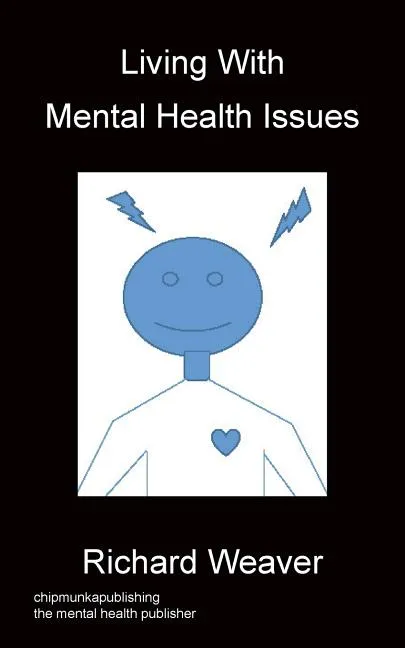
Living With Mental Health Issues
Report an issue
Tell us what's wrong and we'll take a look.
Thanks – we got it. We'll review and follow up if needed.
As a person who lives with Asperger's syndrome (a social and communication disorder on the autistic spectrum), psychosis, mood disorder and a number of lesser mental health problems, I have first-hand experience of the subject. I therefore decided it was time to write about how I originally received inaccurate diagnoses, the struggles both I and my family went through in order to get the correct diagnosis, and then appropriate treatment. In the pages that follow I will talk about how these problems have affected my day to day life in childhood, adolescence, and adulthood (although this will not involve a short autobiography). I hope this project will enable (assuming it gets completed) the reader with psychiatric problems to understand you are not 'crazy' or 'beyond help' and you DO have a future. Whilst (as I have found) you may never eradicate your symptoms completely or even very much, that doesn't mean in any way you can't or shouldn't lead a full, satisfying and meaningful life. You may (as I have) been in trouble with the police, maybe for serious offences - this isn't the end of the world. I have twice been convicted of attempted robbery (and on the first occasion possession of a replica firearm too) - it hasn't stopped me getting part-time paid employment with CHOICE (the organisation who own and the care home where I currently reside) carrying out home inspections in other CHOICE homes in the area to the tune of about £10 per hour. Again, having spent time in secure units in the past need not mean always being dependent on the system, or even after leaving hospital never being very independent. Less than five years ago I was in a secure unit, and had to be accompanied by two staff at first. In the last five weeks I've TWICE flown from Southampton to Edinburgh totally unsupported. For those who work in branches of mental health care, I hope this resource will also be useful by providing an insight first-hand into the isolation having both mental illnesses and a developmental disorder can cause. As stated in the above paragraphs, care-workers will be able to see the transition it is possible for a person affected by poor mental health given the necessary resources, expertise, patience, support from family and friends, time, self-belief and an unshakeable desire to succeed come what may.
Richard Weaver
Richard Weaver is the Tutor for Community Engagement at Coleg y Bedyddwyr Caerdydd/ Cardiff Baptist College. His PhD, from the Vrije Universiteit Amsterdam, focused on developing a stronger Baptist theological ethic for the practice of social justice. Weaver has more than twelve years’ experience as a community organizer in Wales. Previously, he worked for sixteen years in international development, leading policy and campaigns on social and environmental justice issues. Weaver also has much experience of being part of the leadership of Baptist churches engaging in social justice in Wales and England.
More by Richard Weaver










Why Readwise Books?
Readwise Books is an ebook & audiobook platform that automatically logs how much you and your friends read, making it fun and easy to read more. Learn more →