The Jungle
Report an issue
Tell us what's wrong and we'll take a look.
Thanks – we got it. We'll review and follow up if needed.
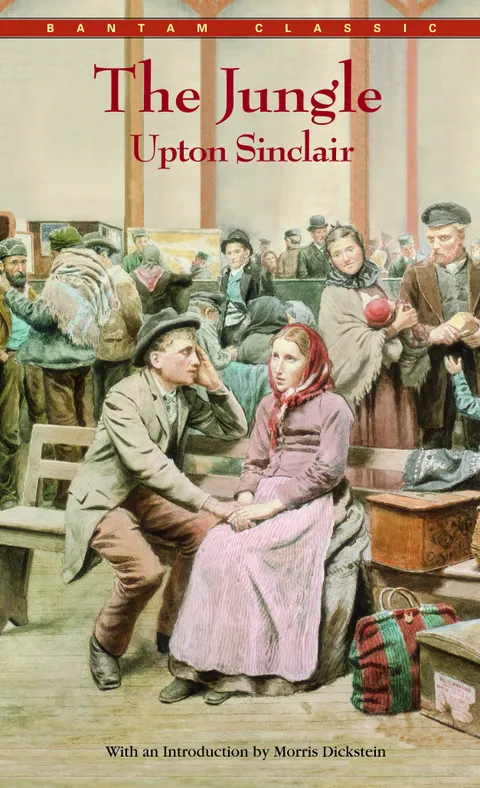
Sinclair had spent about six months investigating the Chicago meatpacking industry for Appeal to Reason, the work which inspired his novel. He intended to "set forth the breaking of human hearts by a system which exploits the labor of men and women for profit". The novel featured Jurgis Rudkus, a Lithuanian immigrant who works in a meat factory in Chicago, his teenaged wife Ona Lukoszaite, and their extended family. Sinclair portrays their mistreatment by Rudkus' employers and the wealthier elements of society. His descriptions of the unsanitary and inhumane conditions that workers suffered served to shock and galvanize readers. Jack London called Sinclair's book "the Uncle Tom's Cabin of wage slavery". Domestic and foreign purchases of American meat fell by half.
Sinclair wrote in Cosmopolitan in October 1906 about The Jungle: "I aimed at the public's heart, and by accident I hit it in the stomach." The novel brought public lobbying for Congressional legislation and government regulation of the industry, including passage of the Meat Inspection Act and the Pure Food and Drug Act. At the time, President Theodore Roosevelt characterized Sinclair as a "crackpot", writing to William Allen White, "I have an utter contempt for him. He is hysterical, unbalanced, and untruthful. Three-fourths of the things he said were absolute falsehoods. For some of the remainder there was only a basis of truth." After reading The Jungle, Roosevelt agreed with some of Sinclair's conclusions, but was opposed to legislation that he considered "socialist". He said, "Radical action must be taken to do away with the efforts of arrogant and selfish greed on the part of the capitalist.
Upton Sinclair
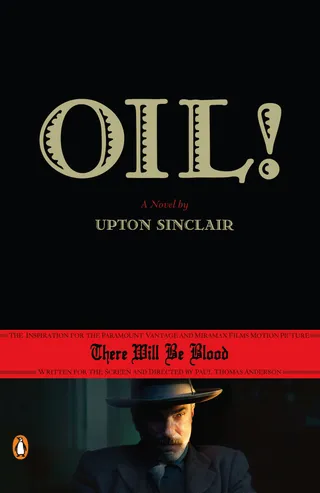
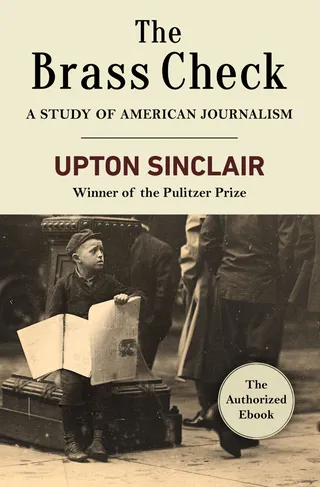
Upton Sinclair (1878–1968) was a Pulitzer Prize–winning author, activist, and politician whose novel The Jungle (1906) led to the passage of the Federal Meat Inspection Act and the Pure Food and Drug Act. Born into an impoverished family in Baltimore, Maryland, Sinclair entered City College of New York five days before his fourteenth birthday. He wrote dime novels and articles for pulp magazines to pay for his tuition, and continued his writing career as a graduate student at Columbia University. To research The Jungle, he spent seven weeks working undercover in Chicago’s meatpacking plants. The book received great critical and commercial success, and Sinclair used the proceeds to start a utopian community in New Jersey. In 1915, he moved to California, where he founded the state’s ACLU chapter and became an influential political figure, running for governor as the Democratic nominee in 1934. Sinclair wrote close to one hundred books during his lifetime, including Oil! (1927), the inspiration for the 2007 movie There Will Be Blood; Boston (1928), a documentary novel revolving around the Sacco and Vanzetti case; The Brass Check, a muckraking exposé of American journalism, and the eleven novels in Pulitzer Prize–winning Lanny Budd series.
More by Upton Sinclair





Why Readwise Books?
Readwise Books is an ebook & audiobook platform that automatically logs how much you and your friends read, making it fun and easy to read more. Learn more →