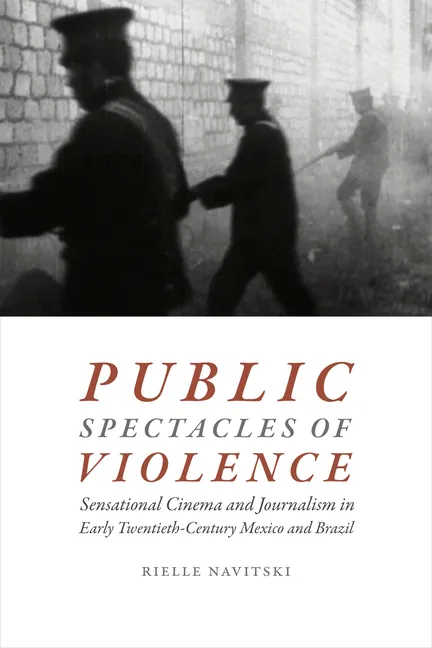
Public Spectacles of Violence
Sensational Cinema and Journalism in Early Twentieth-Century Mexico and Brazil
Report an issue
Tell us what's wrong and we'll take a look.
Thanks – we got it. We'll review and follow up if needed.
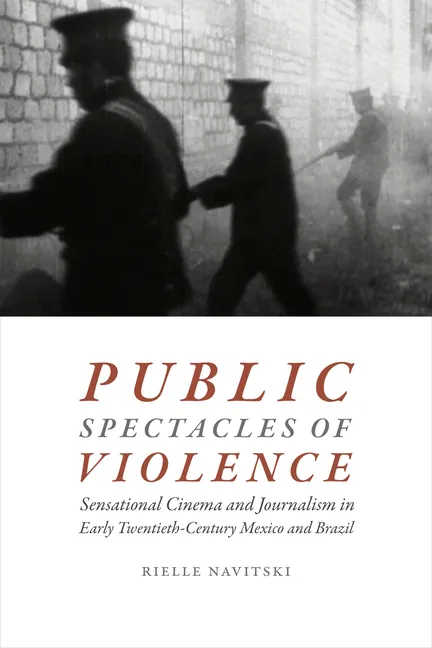
In Public Spectacles of Violence Rielle Navitski examines the proliferation of cinematic and photographic images of criminality, bodily injury, and technological catastrophe in early twentieth-century Mexico and Brazil, which were among Latin America's most industrialized nations and later developed two of the region's largest film industries. Navitski analyzes a wide range of sensational cultural forms, from nonfiction films and serial cinema to illustrated police reportage, serial literature, and fan magazines, demonstrating how media spectacles of violence helped audiences make sense of the political instability, high crime rates, and social inequality that came with modernization. In both nations, sensational cinema and journalism-influenced by imported films-forged a common public sphere that reached across the racial, class, and geographic divides accentuated by economic growth and urbanization. Highlighting the human costs of modernization, these media constructed everyday experience as decidedly modern, in that it was marked by the same social ills facing industrialized countries. The legacy of sensational early twentieth-century visual culture remains felt in Mexico and Brazil today, where public displays of violence by the military, police, and organized crime are hypervisible.
Rielle Navitski
Rielle Navitski is Associate Professor in the Department of Theatre and Film Studies at the University of Georgia and author of Public Spectacles of Violence: Sensational Cinema and Journalism in Early Twentieth-Century Mexico and Brazil.
More by Rielle Navitski


Why Readwise Books?
Readwise Books is an ebook & audiobook platform that automatically logs how much you and your friends read, making it fun and easy to read more. Learn more →