Report an issue
Tell us what's wrong and we'll take a look.
Thanks – we got it. We'll review and follow up if needed.
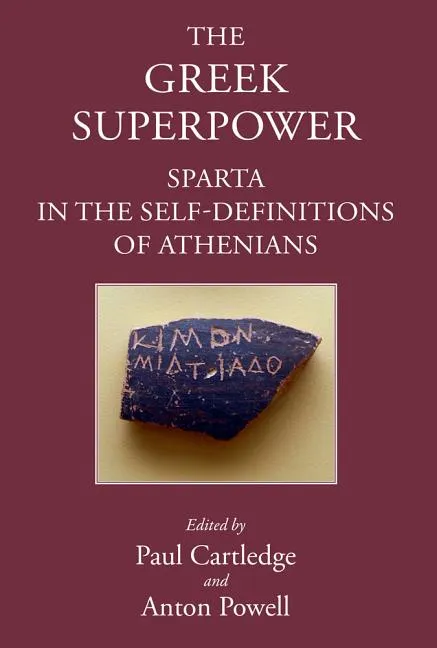
Greeks - in later times - saw Athens as 'the Hellas of Hellas', but in the classical period many Athenians thought otherwise. Athens might be a school of Hellas, but the school of Hellas was Sparta. Militarily and morally, Sparta was supreme. This book explores how Athenians - ordinary citizens as well as writers and politicians - thought about Sparta's superiority. Nine new studies from a distinguished international cast examine how Athenians might revere Sparta even as they fought her. This respect led to Plato's literary creation of fantasy cities (in the Republic and Laws) to imitate Spartan methods. And, after its military surrender in 404 BC, ruling Athenian politicians claimed that their city was to be remodelled as itself a New Sparta.
Paul Cartledge
Paul Cartledge is Reader in Greek History, University of Cambridge. He is the coauthor, with A.J.S. Spawforth, of Hellenistic and Roman Sparta: A Tale of Two Cities (1989) and The Greeks: A Portrait of Self and Others (revised edition, 1997). Peter Garnsey is Professor of Ancient History at the University of Cambridge. His works include Famine and Food Supply in the Graeco-Roman World: Responses to Risk and Crisis (1988) and Ideas of Slavery from Aristotle to Augustine (1996). Erich Gruen is Professor of History and Classics at the University of California, Berkeley. His publications include The Hellenistic World and the Coming of Rome (California, 1984), and Heritage and Hellenism: The Reinvention of Jewish Tradition (California).


Why Readwise Books?
Readwise Books is an ebook & audiobook platform that automatically logs how much you and your friends read, making it fun and easy to read more. Learn more →