Report an issue
Tell us what's wrong and we'll take a look.
Thanks – we got it. We'll review and follow up if needed.
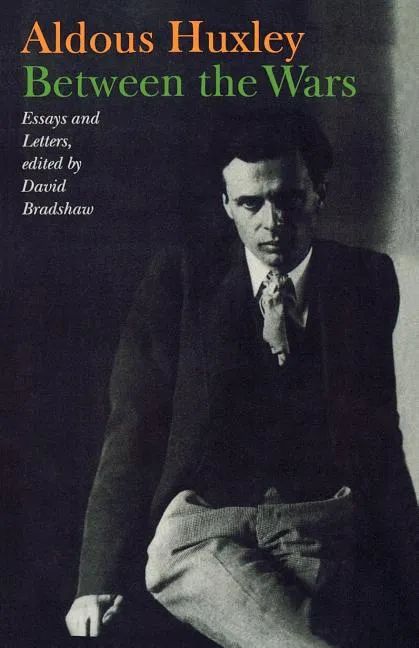
Aldous Huxley had left England by 1923 and was living a balmy exile in Florence, Paris, and the Cote d'Azur. Already a literary success at home, his image-from today's vantage point-was that of an aloof and detached highbrow whose sole concern was to satirize the emotional and intellectual failings of British life. Yet as these newly published letters and essays show, Huxley was drawn to the social and political upheavals of this period between the wars, made frequent visits to England to investigate them, and wrote trenchantly about them. His firsthand experience with Mussolini's fascism and with victims of Nazi oppression led him to renounce authoritarianism and to champion the plight of ordinary men and women. Between the Wars, skillfully edited and introduced by David Bradshaw, contains essays on art and literature, letters to H. L. Mencken, pieces from the early thirties lamenting the behavior of the masses and supporting elite rule, and writings from the late thirties that reveal Huxley's growing disaffection with the direction of European politics. In this centennial year of Aldous Huxley's birth, Between the Wars enhances his stature as one of the giants of modern English prose and of social commentary in our time.
Aldous Huxley
Aldous Huxley (1894–1963) is the author of the classic novels Brave New World, Island, Eyeless in Gaza, and The Genius and the Goddess, as well as such critically acclaimed nonfiction works as The Perennial Philosophy and The Doors of Perception. Born in Surrey, England, and educated at Oxford, he died in Los Angeles, California.
More by Aldous Huxley








Why Readwise Books?
Readwise Books is an ebook & audiobook platform that automatically logs how much you and your friends read, making it fun and easy to read more. Learn more →