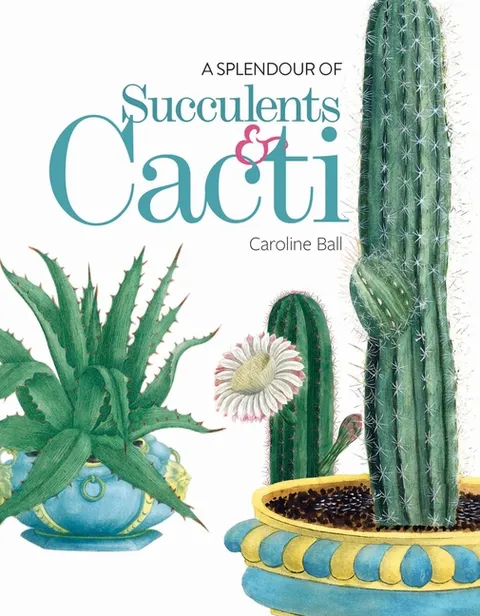
A Splendour of Succulents & Cacti
Report an issue
Tell us what's wrong and we'll take a look.
Thanks – we got it. We'll review and follow up if needed.
Succulents, especially cacti, are both the focus of serious ecological studies and the darlings of designers and style influencers. Their endearing qualities have recently given them the status of trendy "plant pets," but this "succulentomania" is not new. While succulents have always been part of the landscape in the vast, dry climates of the Americas, Australia, and Africa, curiosities such as furry-flowered stapeliads and serpentine euphorbias were also a source of fascination for early European plant collectors.
In eighteenth-century Bavaria, a prosperous apothecary grew an "American aloe" that astounded all who saw it. This apothecary, Johann Wilhelm Weinmann, was the mastermind behind a groundbreaking book that included thousands of plants from all over the world, with descriptions of their individual characteristics and magnificent, specially commissioned color illustrations of each specimen. The succulents Weinmann featured are reproduced here in all their splendor. We may no longer look to them to treat gangrene, manufacture glass, or disperse kidney stones, but succulents are proving of great interest to modern medicine and agriculture, and we can marvel at them afresh not only as wonders of nature but also as works of art.
Caroline Ball
Caroline Ball is an editor, copywriter, and occasional translator who has a particular interest in horticulture, garden history, and plant-hunters. She is the author of Heritage Apples and A Cornucopia of Fruit & Vegetables.
More by Caroline Ball






Why Readwise Books?
Readwise Books is an ebook & audiobook platform that automatically logs how much you and your friends read, making it fun and easy to read more. Learn more →