Report an issue
Tell us what's wrong and we'll take a look.
Thanks – we got it. We'll review and follow up if needed.
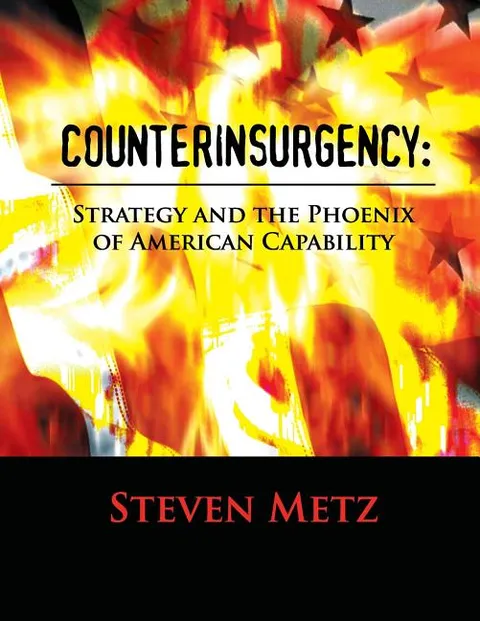
Counterinsurgency is seemingly not of great concern to the U.S. Army today. This may represent a period of remission rather than the apparent abandonment of the mission. It is possible that the U.S. military may again become engaged in counterinsurgency support in the future. In this study, Steven Metz argues that the way the Department of Defense and U.S. military spend the time when counterinsurgency support is not an important part of American national security strategy determines how quickly and easily they react when policymakers commit the nation to such activity. If analysis and debate continues, at least at a low level, the military is better prepared for the reconstitution of capabilities. If it ignores global developments in insurgency and counterinsurgency, the reconstitution of capabilities would be more difficult. Today, there is no pressing strategic rationale for U.S. engagement in counterinsurgency but history suggests that if the United States remains involved in the Global South, one may emerge. American counterinsurgency strategy has unfolded in a distinct pattern over the past 50 years. At times, policymakers saw a strategic rationale for engagement in counterinsurgency. When they did, the military and Department of Defense formed or reconstituted counterinsurgency doctrine, concepts, and organizations. When the strategic rationale faded, these capabilities atrophied. This pattern may be repeated in the future. During the last decade of the Cold War, the U.S. military developed an effective approach to insurgency and implemented it in El Salvador, but this focused on one particular type of insurgency: Maoist "people's war." The El Salvador model may not apply to post-Cold War forms of insurgency. Moreover, many of the basic assumptions of American counterinsurgency strategy appear obsolete. Trends such as ungovernability, the routinization of violence, and the mutation of insurgency change the costs/benefits calculus that undergirded Cold War-era strategy and doctrine. During the current period of remission in insurgency, the Army should use its intellectual resources to analyze ongoing mutations in insurgency and to open a debate on the nature of a cogent post-Cold War counterinsurgency strategy. This strategy should expand its conceptual framework and stress three principles: selectivity, multilateralism, and concentration on secondary support functions including indirect or second-tier engagement. Such efforts will pave the way for the reconstitution of American counterinsurgency should it be required.
Steven Metz
Steven Metz is director of research at the US Army War College Strategic Studies Institute and writes a weekly column entitled "Strategic Horizons" for World Politics Review.
More by Steven Metz




Why Readwise Books?
Readwise Books is an ebook & audiobook platform that automatically logs how much you and your friends read, making it fun and easy to read more. Learn more →